
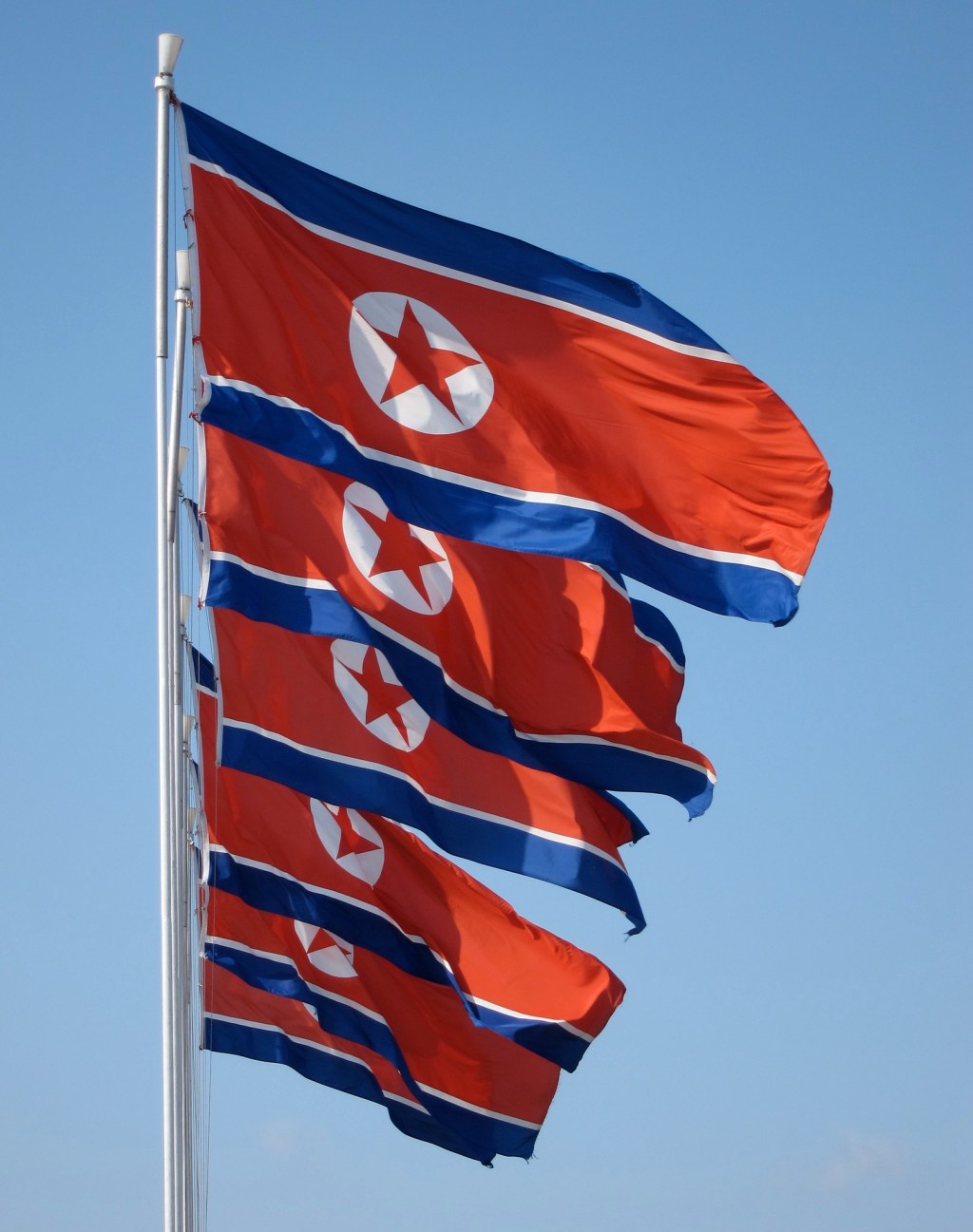
In 2017, United States Secretary of State Rex Tillerson announced an initial ban on American travel to the Democratic People’s Republic of Korea (DPRK). This was extended by Secretary Mike Pompeo in 2018. The ban was a direct response to the arrest of Otto Warmbier, an American college student who was arrested in North Korea for allegedly stealing a propaganda poster, sentenced to hard labor, and later returned to the US in a comatose state. His death shortly after repatriation sparked international outrage and deteriorated US-North Korean relations. Aside from those traveling for pre-approved humanitarian work or journalism, all US passports were invalidated from travel to the DPRK. Coupled with President Trump’s authorization to the US Treasury Department that blocked foreign business and trade with North Korea, the US effectively implemented a “maximum pressure” campaign to push the nation towards denuclearization.1
Lifting the travel ban to the DPRK would serve as an effective tool for expanding US “soft power” and influence in the peninsula, which is especially pertinent today as the Sino-Russo alliance further strengthens in the region. The current ban has imposed barriers for humanitarian aid workers to address dire health and safety needs in North Korea. Reversing this policy and limiting the Special Validation requirements on American passports allows for greater American “soft power” assertion in North Korea through aid.2 Building goodwill among the North Korean population can assert said soft power by creating positive associations and social capital networks, potentially weakening anti-American propaganda narratives.
Based on the current policy, humanitarian organizations navigate complex bureaucratic hurdles, such as Office of Foreign Assets Control (OFAC) licenses, that delay aid delivery and drain resources. Lifting the restriction grants aid workers operational agility—demonstrating a commitment to global humanitarian principles and reinforcing the United States’ role as a leader of human rights. The restriction reduces reliance on intermediaries and third parties, such as financial institutions that hesitate to engage with North Korea due to sanctions risks. The US has historically taken actions to uphold and advocate for human rights in the DPRK, as seen in the 2004 North Korean Human Rights Act, which outlines the US’s democratic commitment to defending the rights of North Koreans.3 The US has also taken steps to sanction several high-level officials for human rights violations under the North Korea Sanctions and Policy Act of 2016.3 Encouraging the travel of aid workers allows for the US to exert its values within the DPRK’s borders.
During the 1970s, the DPRK attempted to build support and allyship in the US by organizing cultural exchanges, advertising in American media outlets, and arranging for prominent US figures to visit North Korea. This form of “public diplomacy” fueled “friendship organizations” that allowed North Korea to portray itself more favorably in the international community.4 The DPRK has successfully utilized “people-to-people” tactics for its diplomatic image. So long as visitors respect local laws, the DPRK has no incentive to create international incidents. After Otto’s death, Pyongyang’s insistence on being characterized as “dignified” demonstrates their concern for international perception.5 Lifting the travel ban would allow ordinary citizens to travel to and from the DPRK, potentially transforming international perceptions and humanizing the often isolated nation. As seen in the case of the 70s and following Otto Warmbier’s transfer to the US, the DPRK does care about its reputation. A greater number of Americans visiting North Korea would give way to positive perceptions, creating informal channels of communication that could gradually improve bilateral relations and potentially influence North Korean society through increased exposure to outside perspectives. This is integral for US intelligence gathering on the DPRK, the creation of economic dependencies through tourist spending which the US can leverage, and the establishment of human connections which serve as a means of crisis prevention. An exchange of North Koreans and Americans also makes military confrontation costlier – acting as a built-in deterrent for a crisis.
As North Korea’s earlier efforts demonstrated, when ordinary citizens from different countries engage with each other directly—whether through diplomatic trips, exchanges, or cultural visits—it can lay the groundwork for broader political dialogue. It is proven that direct interpersonal interaction in “informal and unscripted settings” helps facilitate mutual understanding.6 As not to aggravate Pyongyang, allowing US tourists into DPRK is a “politics-free” way to bolster US-DPRK exchanges. These informal and apolitical conversations will create opportunities for American diplomats to discuss more pressing issues later on, including human rights violations and the nuclear question. These opportunities can be seen in 1994 when President Jimmy Carter visited North Korea. His approach to “unofficial dialogue” differed from those before him, helping pave the way for US-DPRK negotiations on the Agreed Framework.7 Additionally, these interactions give the US a stronger foundation to alter the perspective of North Koreans who are heavily influenced by state-generated propaganda. American tourists would inevitably share information about the outside world with North Koreans they encounter, potentially weakening state propaganda narratives. In a highly centralized totalitarian state, the US can push for democratic values by focusing its attention on altering the perception of the common North Korean.
A phased approach sends a clear signal to North Korea that cooperation on humanitarian matters is a prerequisite for broader engagement, reinforcing the US priority of human welfare. The first phase would be for those travelling for humanitarian purposes and the second would be for tourists. Completing both phases would further American involvement in the North Korean business sector, increasing US bargaining power. Uri Tours, an American-owned tour agency, is one of the largest operators of tours to North Korea.8 If the US were to limit their citizens’ tours of North Korea to ones owned by US-operated companies, the US retains partial control over the tourism infrastructure. American companies dictate the terms of engagement, including what activities, locations, and cultural exchanges are available to tourists—as recommended by the State Department. This gives the US influence over the narrative and the nature of the interactions between Americans and North Koreans.
In addition, the phased approach would strengthen DPRK accountability, ensuring that the State Department’s Bureau of Consular Affairs at home, as well as the existing Swedish Embassy in the DPRK, can first assess the DPRK’s treatment and detainment of humanitarian aid workers. The process would begin by expanding the number of Special Validations given to aid workers applying to travel to the DPRK. Following an observance period, the State Department would then lift the Special Validation requirements for all aid workers. The Bureau of Consular Affairs, with the support of the Swedish Embassy in Pyongyang, would monitor the travel and treatment of these individuals over one year. If no signs of “wrongful” or “long-term” detention are noted, Special Validations for tourists would be approved on a similar timeline.
As each phase progresses, different stakeholders within North Korea develop economic and institutional interests in maintaining the relationship. Farmers benefiting from humanitarian cooperation become internal advocates for continued engagement, while contingencies on tourism revenue from American visitors create an incentive to press for restraint in other policy areas. This creates potential pressure points that US leaders can leverage in the long run. The US can also engage directly with American-owned tour companies as an informal, ambassadorial proxy in the DPRK. This has the potential to create not only personal ties, through people-to-people interactions in tours, but also professional networks between American entrepreneurs and North Koreans.9
Since the US must rely on Sweden as a “protecting power” and ambassadorial proxy to represent its interests, it is challenging to guarantee the safety of American citizens in the absence of direct representation.10 Travel could lead to detentions under arbitrary charges, such as espionage or propagating Christianity, which have previously led to the imprisonment of US citizens. Otto’s situation illustrates the lethal dangers posed by North Korea’s unpredictable legal and punitive system. The absence of an extradition agreement further exacerbates these risks, trapping Americans in the country without recourse for international assistance. As such, minor infractions can result in life-threatening consequences. The US government may struggle to ensure the safety of citizens in such an environment.
However, it is important to note that Otto’s case represents an outlier rather than an ongoing trend. Of the approximately 900 Americans who visited North Korea annually between 2009 and 2017, there were only 14 detentions recorded, which is less than 0.1%.11 After diplomatic interventions, frequently by Sweden,12 the majority of detained Americans were released without incident, indicating that although detention carries some risk, disastrous outcomes are still uncommon. The phased approach proposed specifically mitigates most risks by allowing humanitarian workers to enter the country—who typically have established relationships, a greater understanding of local laws, and in-depth training—before considering tourist travel. This approach provides time for the US to establish safety protocols and evaluate the DPRK’s treatment of American visitors before expanding access. Additionally, lifting the travel ban would not reduce US strategic leverage. In fact, the travel restriction has not necessarily improved America’s negotiating position since its implementation in 2017, during which the DPRK’s nuclear and missile programs have advanced significantly.13
As an alternative, upholding the travel ban might help the US maintain its diplomatic standing. In future negotiations, the US’s position may be weakened if lifting the travel ban is perceived as a concession by the North Korean government. Additionally, the DPRK has shown a pattern of holding Americans as leverage in negotiations—also referred to as “hostage diplomacy”.14 A deliberate use of American citizens as political leverage is suggested by the fact that these detentions have frequently occurred during times of increased tension or significant diplomatic negotiations. For example, following President Donald Trump’s criticism of the DPRK’s nuclear and missile program in May 2017, the government detained US citizen Kim Hak Song not long after.15 Removing the travel ban might unintentionally give the DPRK more negotiating power in future negotiations.
As outlined in the 2014 United Nations Commission of Inquiry report, people-centered dialogue is essential to breaking down barriers of isolation and building trust.15 By allowing US citizens to visit North Korea, especially through carefully managed, US-operated tourism programs, Americans can reestablish communication channels emblematic of multi-track diplomacy. Track 1.5 diplomacy involves both government representatives and non-governmental experts engaging in less formal dialogue than official channels, creating space for “frank and candid”16 discussions while maintaining some governmental connection. Track 2 diplomacy operates as a purely unofficial channel between non-governmental experts without direct government involvement, allowing for the exploration of ideas when official ties are fraught or nonexistent. Both diplomatic tracks supplement traditional government-to-government negotiations by broadening perspectives, facilitating more open communication, and providing forums to develop new approaches that can potentially influence official diplomatic processes. These exchanges help to alleviate misconceptions, encourage cultural understanding, and create a foundation for advancing American interests and, ultimately, security.
During a time when North Korea is welcoming visitors to “friendly”17 nations, including China and Russia, continuing to isolate the country only strengthens its internal propaganda and alienates its citizens from engaging with the broader world, especially Americans. It strengthens the alliance between China, Russia, and the DPRK, which is threatening the post-war world order that the US has fought so hard to preserve. The goal of lifting the travel ban is to make sure that the US is actively involved in diplomacy, not just to permit tourism. By doing this, the US can show that it is committed to a lasting peace and win Kim Jong-Un’s confidence to pursue future formal diplomatic initiatives.
Work Cited:
1. CFR.org Editors, “What to Know About Sanctions on North Korea,” Council on Foreign Relations, last updated July 27, 2022.
2. Sang-Hun, Choe, “U.S. Deadline Forces American Aid Workers to Leave North Korea,” The New York Times, published August 31, 2017.
3. Enos, Olivia, “Twenty Years On, the North Korean Human Rights Act Remains Lapsed,”Twenty Years On, the North Korean Human Rights Act Remains Lapsed,” Hudson, published October 21, 2024.
4. Gauthier, Brandon, “North Korea’s American Allies: DPRK Public Diplomacy and the American-Korean Friendship and Information Center, 1971-1976,” Wilson Center, published January 12, 2015.
5. The Associated Press, “N. Korea says it is “biggest victim” in Otto Warmbier’s death,” CBS News, published June 23, 2017.
6. Jun Ayhan, Siyeon Jang, “Inter-Korean People-to-People Diplomacy: Social
and Cultural Exchanges across the 38th Parallel,” The Hague Journal of Diplomacy, published October 4, 2024.
7. Wertz, Daniel, “Track II Diplomacy with Iran and North Korea,” The National Committee on North Korea, published June, 2017.
8. Lee, Jean H, “Tourism to North Korea: Unethical or an opportunity for engagement?” Brookings, published June 9, 2015.
9. NCAFP, “Track I.5 & Track II Diplomacy,” National Committee on American Foreign Policy, 2024.
10. U.S. Department of State, “U.S. Relations With the Democratic People’s Republic of Korea,”U.S. Department of State, published, February 13, 2025.
11. Ramzy, Austin, “Despite Arrests, Americans Continue to Visit North Korea,” The New York Times, May 9, 2017.
12. Noerper, Stephen E, “Sweden’s Role on the Korean Peninsula: Protecting Power, Mediator and Peacemaker,” The National Committee on North Korea, published October 2023.
13. Arms Control Association, “Arms Control and Proliferation Profile: North Korea,” Arms Control Association, last reviewed June 2024.
14. Kim, Stella, Saphora Smith, “North Korea’s ‘Hostage Diplomacy’: Kim Uses Detained Americans as Leverage,” NBC News, published May 7, 2017.
15. Ahn, Christine, “The North Korea Travel Ban Will Do More Harm Than Good,” The New York Times, published August 2, 2017.
16. Sokol Lia, “Multi-Track Diplomacy Explained,” Nuclear Threat Initiative, published April 19, 2022.
17. Ahn, “The North Korea Travel Ban Will Do More Harm Than Good,”
 Foreign Affairs Review