
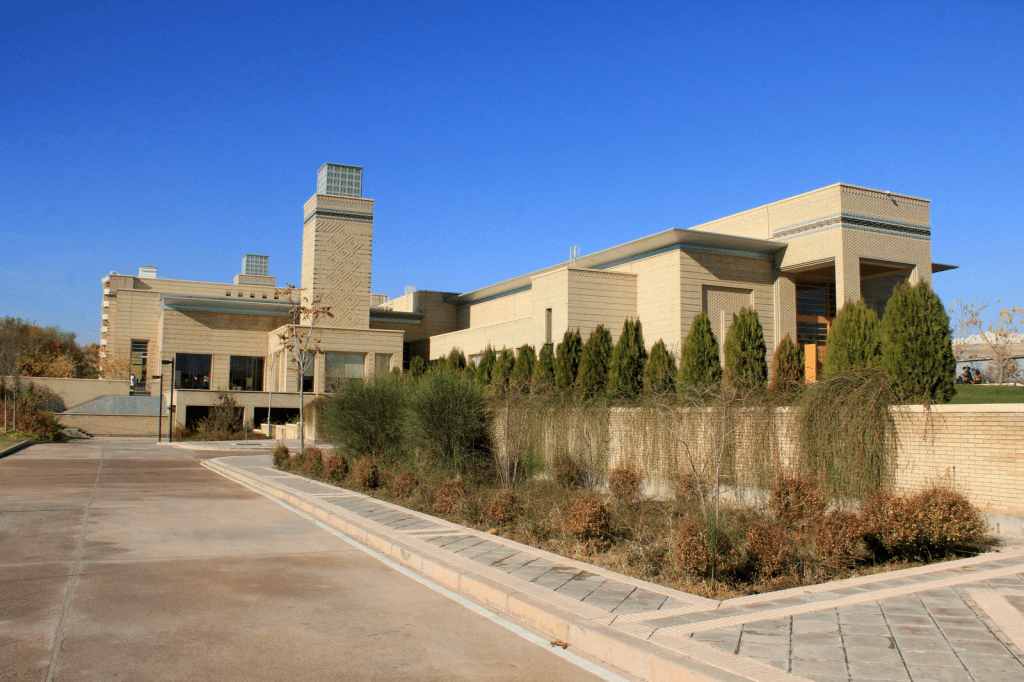
Founded in 1967, the Aga Khan Development Network (AKDN) is a charitable organization providing financial, social, educational, and welfare services to people in developing countries, run by the Aga Khan, the spiritual leader of the Ismaili Muslims. They operate in over 30 countries, running schools, hospitals, and community-based programs for businesses and civil society. The AKDN is unique in its operations because it operates independently from any government, both in terms of leadership structure and finances. This independence allows it to invest in long-term projects without fear of being shut down. In other development organizations like USAID, long-term projects are difficult because they use taxpayer funds, so the government and investors want immediate results. The AKDN’s self-reliance means that it can have a greater impact on long-term growth and development.
Today, the AKDN provides financial services to over 50 million people, education to over two million, and health care to 14 million people across Asia and Africa.1 They have over 96,000 employees and frequently partner with other organizations or governments to increase their reach.2 The AKDN spends over $1,000,000,000 a year on nonprofit development activities, and all surplus from AKFED businesses is reinvested into the network and its projects.3
How Did We Get Here?
Ismaili Islam is a branch of Shia Islam that broke away around the year 765 CE over a debate about the successor of Ja’far al-Sadiq, the sixth Shia Imam, who is a religious leader. They are called “Ismailis” because they followed Ja’far’s eldest son and designated successor, Isma’il ibn Ja’far, as the seventh Imam. The larger Shia group, who became the Twelvers, believed Isma’il had died before his father and instead followed a younger son, Musa al-Kazim.4
After 765 CE, Ismailis spread around the world, becoming particularly powerful with the founding of Cairo in modern-day Egypt and the Ismaili Fatimid dynasty. Although the dynasty eventually collapsed, its end was marked by another major succession crisis in 1094 CE that divided the community. The split created the Nizari branch (who followed Nizar) and the Bohra branch (who followed Musta’li),5 which created communities and pockets of Ismaili Muslims around the world.
Ismailis believe that the Imam, who is divinely guided, has the exclusive right to interpret Islamic law. For Ismailis, the Quran has two meanings: a literal, scripture-based meaning and an inner spiritual meaning. They believe the Prophet Muhammed brought the literal meaning, and the current Imam guides and interprets the spiritual meaning.6 In this paper, we discuss the Nizari Ismailis’ Imam (the Aga Khan) and his philanthropy network.
In 1967, His Late Highness Prince Karim Aga Khan IV, the 49th hereditary Imam of the Shia Ismaili Muslims, founded the Aga Khan Foundation (AKF) with the purpose of “addressing the root causes of poverty and supporting community institutions to carry out sustainable, locally-driven initiatives that improve the quality of life.”7 This was one of the first branches of the Aga Khan Development Network (AKDN) and marked the beginning of a consolidation of the Aga Khan’s holdings into the larger network that exists today. Several key sectors were brought together at this time: in 1963, the Aga Khan Fund for Economic Development (AKFED) was created as the main economic arm of the network, with the Industrial Promotion Services as a parent corporation connecting the network’s many businesses.8 The first Aga Khan Hospital was built in 1971 in Karachi, Pakistan, starting the Aga Khan Health Services.9 The last of the founding branches was Aga Khan Education Services, where pre-existing schools owned by the Aga Khan in Tanzania and other countries were consolidated under central and regional education boards to incorporate them into the network, which later added the Aga Khan University system.10
A founding tenet of the network is the secularity of operations. The Aga Khan IV emphasized the idea that the AKDN is meant to support all people, not just Ismailis, with no strings attached. In an interview, he notes that “communities like the Ismailis don’t live in a vacuum,”11 and says addressing concerns in non-Ismaili societies will better their quality of life and the quality of life for the Ismailis as well.12 Ismailism stopped engaging in proselytization, the act of actively promoting conversion, after the 18th century. Thus, the AKDN does not encourage conversion or promote Ismailism to the communities it serves.13 On the subject, in a speech to the Kenyan people and president about the opening of a new factory, the Aga Khan said the following: “Consequently, the Imamat’s is a holistic vision of development, as is prescribed by the faith of Islam…But it is also about investing with a social conscience inspired by the ethics of Islam. It is work that benefits all, regardless of gender, ethnicity, religion, nationality or background. Does the Holy Quran not say in one of the most inspiring references to mankind, that Allah has created all mankind from one soul?”14 Essentially, the AKDN in no way promotes Ismailism or limits its activities to supporting Ismailis—the network is based around the Islamic ethics of collective responsibility, providing sustainable physical, social, and cultural development for as many people as possible.
Overall, the AKDN demonstrates a global commitment to improving quality of life for all people, without regard to religious faith or political affiliation.
Where does the AKDN get its funding?
The AKDN’s economic wealth comes from two key sources: “tithes” and prior investments. The Aga Khan himself is immensely wealthy, but this is inherited from his father and is not connected to the AKDN’s funds. He maintains that the two are always kept separate,15 although the Aga Khan has frequently injected personal funds into the network for new projects or support for existing ones, especially in support of the Aga Khan University system.16 In terms of central funding, a large portion is through tithes (voluntary donations) paid by Ismailis around the world. This is called dasond and is usually between 10% and 12.5% of income, but the amount and if they contribute is completely optional, albeit religiously promoted.17 This gift is unconditional and goes to the Aga Khan, but he affirms that it is kept separate from his personal finances and is only used for the Imammat and the AKDN.18 The other major source of funding for the AKDN comes from early investments like Nation Media Group. The Nation Media Group was founded by the Aga Khan IV in the 1960s to give a voice to indigenous leaders in Africa during decolonization and has quickly grown into the leading media corporation in Africa, owning news stations in Tanzania, Kenya, Uganda, and Rwanda.19 Investments like this have become large revenue generators for the network, and their profits are reinvested into further projects.
Aga Khan Health Services
Prior to the official founding of the AKDN, the Aga Khan operated scattered medical centers in Africa and Asia. The first was the Janbai Maternity Home, established in Kharadar, Karachi, Pakistan, in 1924. Shortly after, in 1929, a health centre was built by the Aga Khan in Dar es Salaam, Tanzania. Aga Khan Health Services officially began as a branch of the AKDN in 1971 with the construction of the Aga Khan Hospital in Karachi. Today, as of 2022, the AKHS has 15 hospitals and 451 health centres operated around the world,20 with 4 hospitals and 100 centres being in East Africa. In their health programs, AKHS emphasizes their cooperation with local governments and health ministries, as well as their focus on supporting vulnerable and/or rural communities. This paper evaluates the effectiveness of three AKHS programs: the Aga Khan University Hospital, Nairobi; Cancer Care Programs in Tanzania; and E-Medicine and Telehealth across East Africa.
Case Study 1: The Agha Khan University Hospital in Nairobi
Since its opening as a community hospital in 1958 and subsequent accreditation as a university hospital in 2005 by Joint Commission International, the Aga Khan University Hospital, Nairobi (AKUH-N) has developed a model for medical treatment and education that demonstrates the potential for highly effective health investment on the part of non-governmental organizations.21 Fundamentally, AKUH-N functions as a comprehensive medical facility that offers diverse treatment options for a variety of conditions and as an educational institution that provides training to East African professionals of wide-ranging specialties. The AKUH-N’s mission is “to be the premier, tertiary, teaching and referral healthcare facility in sub-Saharan Africa,” so that it maintains the capacity to “provide access to quality healthcare to all who need it.”22 Given the stated mission of the AKUH-N and its status as a flagship feature of the AKHS network, does the AKUH-N successfully fulfill its role as a versatile care facility that supplements medical capacities and expands patient access in the health sector of East Africa?
Generally, the practices of the AKUH-N align with its goals of developing a high standard of care for its patients and promoting a well-educated medical workforce in East Africa. The hospital has repeatedly invested in and delivered on the establishment of new, previously unavailable treatments in the region and expanded the workforce of medical professionals in East Africa. In the last decade, AKUH-N has been the site of extensive investment in modern medical treatment in East Africa. 2018 saw AKUH-N invest 600 million Kenyan shillings (~ $5 million) into the Positron Emission Tomography-Computed Tomography (PET-CT) scanner and Cyclotron, which brought with it the promise of cutting-edge care and diagnosis for varying diseases and conditions, including heart disease and cancer.23
The implication of this new technology, like PET-CT and Cyclotron, is that patients no longer have to leave the East African region to access the standard of care that AKUH-N is now capable of providing, which dramatically boosts access to high-quality care for Kenyans and other East Africans, especially those in more rural areas.24 Overall, AKUH-N experiences a high level of success in bringing advanced medical capabilities to a region of the world that has so far lacked them. In 2018, the same year that AKUH-N acquired the PET-CT and Cyclotron, AKUH-N became the first hospital-based clinical laboratory in Africa to receive accreditation from the College of American Pathologists, one of the most prestigious accreditation bodies in the world for clinical laboratories, establishing the AKUH-N as one of the most advanced and most credible hospitals in East and Central Africa.25 Creating new pathways to diagnosis and, eventually, treatment for Kenyans, AKUH-N embodies its fundamental mission to promote the highest standards of care in East Africa. Not only is AKUH-N responsible for developing new and advanced medical capabilities in the East African region, but it is also responsible for making innovative treatment and diagnosis affordable for every patient. In an interview with the president of the Aga Khan University, he states that the Patient Welfare Program at AKUH-N is able to provide financial assistance to the 75-80% of its patients that are not able to afford the quality of care that AKUH-N provides, further reducing the barriers that patients in Kenya face as they seek medical care, especially as 39.8% of the Kenyan population lives in poverty.26
Over the course of its existence as a university hospital, AKUH-N has demonstrated a high level of competency in developing a more educated medical workforce in East Africa. Just as AKUH-N is making rapid progress in expanding the availability of high-quality patient care in Kenya, it is expanding the education that is available to medical professionals in East Africa almost as quickly. In 2023, the AKUH-N began offering two new undergraduate degrees: Bachelor of Medicine and Bachelor of Surgery (MBChB) and Bachelor of Science in Nursing—Direct Entry.27 Since these programs have been offered, AKUH-N has begun training over 120 new medical professionals in these fields.28 As The Aga Khan University acknowledged in its own article discussing the gap in healthcare human resources, Kenya’s ratio of 13.8 healthcare workers per 10,000 people (Kenyan Ministry of Health, 2019) and, more recently, up to 20 healthcare workers per 10,000 in a 2023 estimate (Kenyan Ministry of Health), is far short of the World Health Organization recommendation of 44.5 healthcare workers per 10,000 people.29 With the AKUH-N’s approach to developing a strong medical workforce in the East Africa region, it is playing a substantial role in reducing the deficit of medical professionals in the region.
Case Study 2: Cancer Care in Tanzania
In Tanzania, the Aga Khan Development Network has proven itself capable of leading a coalition network to implement widespread improvements in Tanzania’s cancer-care system. With its €13 million (approximately $15.1 million) Tanzania Comprehensive Cancer Project (TCCP), the Aga Khan Development Network set out in 2019 “to improve the organization and quality of care provided in the country, through financial, technical and material support.”30 The AKDN approached this mission with a collaborative model for improvement in Tanzania’s cancer-care system, engaging in a “public-private partnership” between the AKDN, the Institut Curie, and the Agence Française de Développement (AFD), “to complement Government efforts in addressing the challenges facing cancer care in Tanzania.”31 Although the overall prevalence and mortality of cancer per 100,000 people in Tanzania stayed relatively stable throughout the duration of the TCCP from 2019 to 2023, the country experienced a modest decrease in the overall disability-adjusted life years (DALYs) lost to cancer during the program.32 With data on cancer in Tanzania from the past two years still being processed, the key success of the TCCP can be viewed in the increasingly efficient and accessible application of oncology resources in Tanzania. From 2019 to 2023, the TCCP coalition spread awareness of early cancer screening to 4.45 million Tanzanians, brought 673,000 Tanzanians to cancer screening centers, and increased the number of radiotherapy machines in the country from seven in 2019 to 11 in 2023.33
Additionally, the TCCP was successful at raising the rate of early-stage cancer diagnosis from 15% in 2020 to 28% in 2023, training 864 health workers, and forming a new cancer center in Dar es Salaam.34 The TCCP made key advancements in Tanzanian cancer care that addressed many of the issues that the country’s oncology system previously faced. Prior to the TCCP, Tanzania only had 0.31 doctors per 10,000 people and two cancer centers to service the country’s population of 55 million people, placing a severe strain on the network of cancer-care providers in the country.35 Though the AKDN did not completely solve any of the underlying structural challenges that cancer care in Tanzania faces, the AKDN used the TCCP to establish and execute a framework for reducing many of the barriers to care generated for cancer patients by an under-equipped and understaffed oncology network in Tanzania. By engaging a broad coalition of both government and non-governmental developmental agencies, the Aga Khan Development Network was able to expand cancer care in Tanzania, demonstrating the strength of its development model and the capacity for an NGO to effect meaningful change in health outcomes in low-income countries.
Case Study 3: Telehealth Initiatives
Few medical advancements have the capacity to expand patient access to care quite like telemedicine. The COVID-19 pandemic fueled a meteoric rise in telemedicine usage, and the practice has been recognized as a valuable tool for providing high-level care across distance at a relatively low cost.36 Given the cost-effectiveness of telemedicine, it is well suited to countries like Tanzania and Uganda, where the median income is low and the majority of the population lives in rural areas.37 Recently, many telemedicine companies have begun operations in East Africa, such as Amref Health Africa in Kenya, SimuConsult in Tanzania, and Rocket Health in Uganda.38 These firms offer a diverse selection of resources; however, many telemedicine services in East Africa are hampered by a low level of internet connectivity in the region.39 The Aga Khan University (AKU) is taking a unique approach to telemedicine in the East African region and developing telemedicine networks that promote connectivity between healthcare providers.40 Since its implementation in 2023, the AKU’s MEDITECH Electronic Health Record system has been successful in fulfilling its purpose as an interoperable platform for sharing patient health histories between healthcare providers. Not only has the new platform promoted strong collaboration between healthcare providers in East Africa, but it has also empowered patients of hospitals and other healthcare providers that collaborate with the AKDN to access their health records through an easily accessible patient portal.41 Not only does the MEDITECH system promote patient and facility access to medical histories, but it also streamlines medical research in East Africa, where MEDITECH software is helping to drive data-driven research.42 On the whole, the Aga Khan University’s partnership with MEDITECH is applying telemedicine to East Africa in a manner that is well-suited to the region’s level of internet connectivity and promotes a more integrated healthcare ecosystem in East Africa.
Conclusion
Since its official founding in 1967, the Aga Khan Development Network has been a force for good across Africa and Asia, supporting rural and marginalized communities across all sectors. Their health initiatives in East Africa have successfully brought more specialized care, cancer support, and telehealth access to communities in Kenya, Tanzania, and Uganda, conducting over 1.2 million outpatient visits and over 2.7 million pathology tests.43 As we look forward to the future of healthcare in the region, it is important to place the AKDN’s success in context with their partnerships with local governments. Funding is provided by their regular collaborations with the European Union or nation-specific development agencies, and project implementation is carried out with planning and consultation from local government and community leaders. This creates accountability and effective action by leaders who know and understand their own community.
As the AKDN’s operations expand around the world and continue to succeed in health and other areas, we recommend that they be used as a model for other development organizations moving forward. From the case studies, we can derive three key aspects of the AKDN’s model that should be applied to other development organizations. First, from the Aga Khan University Hospital in Nairobi, the most important takeaway and reason for its success is the emphasis on creating self-sufficiency and long-term gains. The hospital is not just a medical facility—it is also training a new generation of doctors for Kenya and East Africa as a whole. Instead of focusing on immediate gains, it is creating exponential growth in the health systems of Africa and removing reliance on foreign aid. Second, from the cancer care programs in Tanzania, we can see the value of local partnerships. Cancer care was a gap recognized by the Tanzanian government, and so the AKDN began its programs. By solving problems identified by locals themselves, it creates both goodwill towards the development organization and larger overall gains. Evidently, citizens and governments in the area know significantly more about the problems facing their community than international groups, and so resources will be allocated more efficiently and do more good if they are distributed according to the community’s needs. Lastly, from the telehealth initiatives, we can see the AKDN’s emphasis on connecting rural areas to population centers. Creating these bridges, even if just through telehealth initially, is a step towards bringing rural towns into the country and also into the international community as a whole. Farmers and businesses in these small communities will benefit greatly from these new connections by opening them up to new markets and innovations.
All 3 of these takeaways, however, are possible for one key reason. The AKDN is not tied to any government in the world. Governments, because of changing political parties and public opinion, create inherently unstable development organizations. As seen with USAID, the organization can be shut down or have its funding cut at any point by a new administration, rendering years of progress null. Although USAID has good intentions, which was seen through its successful smallpox eradication program, its efforts are undermined by its reliance on public funding. The AKDN, on the other hand, is run by the Aga Khan and funded by Ismailis through tithes and the AKFED’s revenue, making it independent of political pressure. As other organizations look to improve their development efforts, they should look to the AKDN as a model for success.
Works Cited
1. Aga Khan Development Network, “Improving the Quality of Life,” November 13, 2025, https://the.akdn/en/home.
2. Aga Khan Development Network, “Where We Work,” March 7, 2025, https://the.akdn/en/where-we-work.
3. Aga Khan Development Network, “Aga Khan Development Network: Improving Quality of Life in Fragile and Remote Environments,” 2025, https://static.the.akdn/53832/1739877873-akdn-quick-facts_en_new.pdf.
4. Farhad Daftary, The Isma’ilis: Their History and Doctrines (Cambridge: Cambridge University Press, 2007).
5. Daftary, The Isma’ilis.
6. Farhad Daftary, A History of Shi’i Islam (2013).
7. Aga Khan Foundation, “About Us – Aga Khan Foundation,” July 14, 2025, https://akf.org/about-the-aga-khan-foundation/.
8. Aga Khan Development Network, “Industrial Promotion Services,” May 7, 2025, https://the.akdn/en/how-we-work/our-agencies/aga-khan-fund-economic-development/industrial-promotion-services; Aga Khan IV, “Speech by His Highness the Aga Khan” (speech, Nairobi, Kenya, December 19, 2003), Ismaili.NET – Heritage F.I.E.L.D., http://heritage.ismaili.net/node/25916.
9. Sara Honarmand Ebrahimi, “The Aga Khan University Hospital in Karachi and the Unity of Din and Dunyā,” ABE Journal 24 (January 1, 2024), https://doi.org/10.4000/13939.
10. S. Pardhan, A. Shah, S. Saad, K. Panah, M. Zaman, and K. Khan, “A Journey of Transformation: A Reflective Recount of the Evolution of AKES,P” (conference paper, In Search of Relevance and Sustainability of Educational Change: An International Conference at Aga Khan University Institute for Educational Development, November 1-3, 2012), 482–487.
11. “Interview of H.H. The Aga Khan F.T. 26 Sept. 2008,” Ismaili.Net, September 29, 2008, https://forum.ismaili.net/viewtopic.php?t=4574.
12. Aga Khan Development Network, “Industrial Promotion Services.”
13. Stephen M. Cherry, Helen Rose Ebaugh, and Karim H. Karim, “Aga Khan Development Network: Shia Ismaili Islam,” in Global Religious Movements Across Borders: Sacred Service (London: Routledge, 2014), 143–60.
14. Daftary, The Isma’ilis.
15. Paroquias.org, “Entrevista Aga Khan – O Ocidente devia aceitar que o islão não separa o mundo e a fé,” Paroquias.org – Noticias, July 23, 2008, https://www.paroquias.org/noticias.php?n=7548.
16. “Aga Khan University Report 2012,” 2012, https://ecommons.aku.edu/cgi/viewcontent.cgi?article=1009&context=aku_report.
17. Mowlana Hazar Imam, interview by the London Newspapermen, BBC, May 2, 1958, https://ismaili.net/intervue/580502.html.
18. Aga Khan IV, interview by Michael Charlton, BBC Radio 4, September 6, 1979, http://heritage.ismaili.net/node/36126.
19. Nation Media Group, “Who We Are – The Nation Media Group,” accessed November 13, 2025, https://www.nationmedia.com/who-we-are/; Cherry, Ebaugh, and Karim, “Aga Khan Development Network,” 153–154.
20. “About the Aga Khan Health Services,” The Ismaili, July 25, 2022, https://the.ismaili/us/en/news/about-the-aga-khan-health-services.
21. Aga Khan Development Network, “AKHS in East Africa,” November 16, 2023, https://the.akdn/en/how-we-work/our-agencies/aga-khan-health-services/akhs-in-east-africa.
22. Scimago Institutions Rankings, accessed November 13, 2025, https://www.scimagoir.com/institution.php?idp=55829.
23. “Agha Khan University Hospital Invests Ksh600 Million To Fight Cancer,” East African Business Week (Uganda), October 30, 2018, NewsBank: Access World News – Historical and Current, https://infoweb.newsbank.com/apps/news/document-view?p=WORLDNEWS&docref=news/16F66E05553E1C40.
24. “GE Healthcare and Aga Khan University Hospital Host PET CT and Cyclotron Symposium on the Diagnosis and Management of Cancer,” APO Group – Africa Newsroom, October 25, 2018, https://gevernova.africa-newsroom.com/press/ge-healthcare-and-aga-khan-university-hospital-host-positron-emission-tomography-pet-computed-tomography-ct-and-cyclotron-symposium-on-the-diagnosis-and-management-of-cancer?lang=en.
25. “Aga Khan Hospital Laboratory Gets Accreditation From College Of American Pathologists,” East African Business Week (Uganda), December 18, 2018, NewsBank: Access World News – Historical and Current, https://infoweb.newsbank.com/apps/news/document-view?p=WORLDNEWS&docref=news/17064379F66DDE50.
26. Central Michigan University, “‘The Power of Transformation’ Through Higher Education and Health Care,” October 6, 2025, https://www.cmich.edu/news/details/the-power-of-transformation-through-higher-education-and-health-care; Kenya National Bureau of Statistics, “Kenya Poverty Report 2022,” January 2024, accessed November 16, 2025, https://www.knbs.or.ke/wp-content/uploads/2024/10/The-Kenya-Poverty-Report-2022.pdf.
27. The Aga Khan University, “Bridging the Human Resource Gap in Healthcare,” April 25, 2023, accessed November 13, 2025, https://www.aku.edu/news/Pages/News_Details.aspx?nid=NEWS-002979.
28. The Aga Khan University, “Pioneer Class of Undergraduate Medicine & Nursing Joins AKU,” September 15, 2023, accessed December 26, 2025, https://www.aku.edu/news/Pages/News_Details.aspx?nid=NEWS-003078.
29. Kenya National Bureau of Statistics, “Kenya Poverty Report 2022”; Kenyan Ministry of Health, “Kenya Health Facility Census Report: Towards Achievement of Universal Health Coverage,” September 2023, accessed November 13, 2025, https://www.health.go.ke/sites/default/files/2024-01/Kenya%20Health%20Facility%20Census%20Report%20September%202023.pdf.
30. Institut Curie, “Institut Curie in Tanzania: Look Back at a Vast 4-year Project to Improve Cancer Care,” June 29, 2023, accessed November 13, 2025, https://institut-curie.org/news/openness/institut-curie-tanzania-look-back-vast-4-year-project-improve-cancer-care.
31. “Revitalizing Cancer Care in Tanzania: Evaluating the Impact of the Exemplary Tanzania Comprehensive Cancer Project (TCCP),” Aga Khan Hospitals, June 30, 2023, https://agakhanhospitals.org/en/post/revitalizing-cancer-care-in-tanzania.
32. Institute for Health Metrics and Evaluation (IHME), “GBD 2021 Results” (Seattle: IHME, 2023), accessed November 13, 2025, https://vizhub.healthdata.org/gbd-results/.
33. AFD – Agence Française de Développement, “Institut Curie in Tanzania: Look Back at a Vast 4-year Project to Improve Cancer Care,” accessed November 13, 2025, https://www.afd.fr/en/actualites/communique-de-presse/institut-curie-tanzania-look-back-vast-4-year-project-improve-cancer-care.
34. Daftary, The Isma’ilis.
35. Zainab Alwash, Oliver Henke, Furaha Serventi, and Eva Johanna Kantelhardt, “Staff Perspectives Toward Challenges in a Newly Established Cancer Center in Tanzania: A Qualitative Study,” Journal of Global Oncology 5, no. 5 (April 3, 2019): 1–8, https://doi.org/10.1200/jgo.18.00246.
36. Julia Shaver, “The State of Telehealth Before and After the COVID-19 Pandemic,” Primary Care: Clinics in Office Practice 49, no. 4 (April 25, 2022): 517–30, https://doi.org/10.1016/j.pop.2022.04.002; Carolyn Rutledge, Karen Kott, Patty Schweickert, Rebecca Poston, Christianne Fowler, and Tina Haney, “Telehealth and eHealth in Nurse Practitioner Training: Current Perspectives,” Advances in Medical Education and Practice 8 (June 1, 2017): 399–409, https://doi.org/10.2147/amep.s116071.
37. Central Intelligence Agency, “Tanzania,” The World Factbook, accessed February 4, 2026, https://www.cia.gov/the-world-factbook/countries/tanzania/; Central Intelligence Agency, “Uganda,” The World Factbook, accessed February 4, 2026, https://www.cia.gov/the-world-factbook/countries/uganda/#people-and-society.
38. JEPA Africa Cloud, “TeleHealth Adoption in East Africa,” February 2025, https://cloud.jepaafrica.com/s/njFpwJttjF4XgWP?dir=/&editing=false&openfile=true.
39. Central Intelligence Agency, “Tanzania.”
40. Meditech, “Aga Khan Health Services, East Africa and MEDITECH Unveil Landmark Electronic Health Record (EHR) Implementation, a Game-changer for Healthcare in Tanzania and East Africa,” ITWeb Africa, August 4, 2023, https://itweb.africa/article/aga-khan-health-services-east-africa-and-meditech-unveil-landmark-electronic-health-record-ehr-implementation-a-game-changer-for-healthcare-in-tanzania-and-east-africa/kLgB17ez9JXM59N4.
41. “Aga Khan University Hospital, Nairobi Empowers Care With MEDITECH Expanse Implementation,” MEDITECH, March 26, 2024, https://ehr.meditech.com/news/aga-khan-university-hospital-nairobi-empowers-care-with-meditech-expanse-implementation.
42. JEPA Africa Cloud, “TeleHealth Adoption in East Africa.”
43. “Aga Khan Health Services Tanzania,” Aga Khan Health Service, accessed November 13, 2025, https://www.akhs.org/en/tanzania; “Aga Khan Health Services Kenya,” Aga Khan Health Service, accessed November 13, 2025, https://www.akhs.org/en/kenya.
 Foreign Affairs Review