
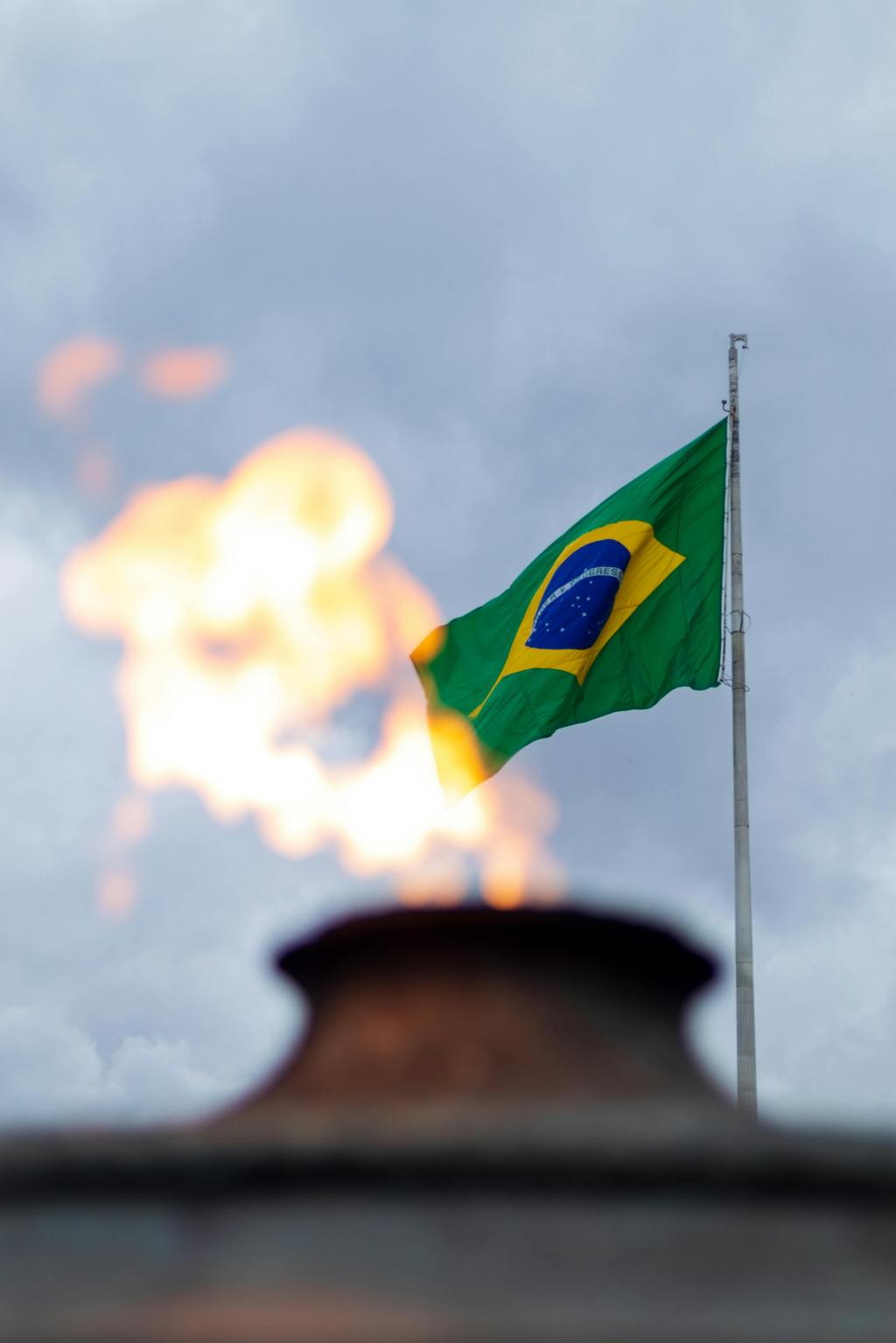
While Vladimir Putin of the Russian Federation and Kim Jong Un of the Democratic People’s Republic of Korea claim to be democratic leaders, they are more accurately dictators. It is easy for states to assert the title of “democracy” but much more difficult to maintain democratic ideals. Likewise, the Federative Republic of Brazil claims to be democratic, hosting free and fair elections and an independent judiciary. Yet, the government’s recent restrictions on free speech—a core tenet of democracy—suggest otherwise. Brazil may not be as holistically authoritarian as Russia and North Korea, but if it does not reaffirm the constitutionality of Article 19 of the Marco Civil da Internet, it faces a bleak reality ahead.
Brazil’s judicial attacks on social media companies foster a hostile environment for free speech. In August of 2024, the Brazilian Supreme Federal Court (STF) banned X (formerly Twitter) after it ignored a court order to remove the profile of a Brazilian political blogger living in the U.S.1 While X was eventually reinstated, the attacks on political discourse did not stop, they merely shifted their targets: the government’s next assault was on the Marco Civil da Internet (Law n. 12.965/2014). In 2014, Brazil passed the Marco Civil to protect media platforms; Article 19 of the law reads, “in order to ensure freedom of expression and prevent censorship,” internet application providers are largely shielded from civil liability “for damages arising from content generated by third parties.”2 Essentially, social media companies are not legally responsible for posts made by users on their platforms. However, in June of 2025, the STF ruled major portions of the Marco Civil unconstitutional, particularly Article 19.3 Social media companies are now forced to remove any content that could be perceived as problematic, or risk being held liable. Yet, for the estimated 75% of Brazilians who currently use some combination of Facebook, Twitter, Telegram, and TikTok,4 social media is a vital source of communication. The scope of the problem effects every person looking for a safe space in online chatrooms, family members separated by distances sending short-form videos to communicate, or even just teenagers wishing to send a direct message. Forcing companies to censor speech erodes Brazil’s democracy and yields critical implications for the public.
When social media platforms are responsible for monitoring and potentially censoring every post made by users, there is no potential for small businesses to break into the media industry. The STF’s ruling “forces platforms to review millions of posts every day to discover items not against their policies but against the laws of Brazil.”5 Social media companies would need to become experts in Brazilian law, requiring funding for a massive staff dedicated to understanding the law, combing through endless content, and applying that law to the content. Challenges to specific rulings are to be expected, meaning that companies must also spend time and resources fighting legal battles over their staff’s content moderation decisions. The result is a system “that might be manageable for bigger companies, but certainly not for smaller companies.”6 If allowed to develop, start-ups, which can contribute to local economies, will be rendered functionally impossible. But, without the initial financial or personnel resources to dedicate to becoming glorified hall monitors, they will never emerge. Instead, the online ecosystem will further concentrate in the hands of the established media.7 The few billionaires who already own major platforms will function as a technological oligarchy, with unregulated power over the captive public. Brazil’s new media regulations only make room for mainstream companies, and, similarly, there is only room for mainstream opinions.
When legal liability is on the line, social media companies are more likely to overcensor rather than undercensor. Forget small start-ups—the level of moderation necessary may be too dense for even major companies, as the only way to keep up is by forcing platforms “to aggressively remove any content that they think might come close to violating the law.”8 Social media companies must essentially take a “better-safe-than-sorry” approach and proactively censor any speech that could cost them a legal battle. For example, content related to mental health could be removed for fear of violating the “incitement to self-harm” criteria,9 posts searching for domestic violence support could be censored under the “crimes against women” criteria, or images depicting the October 7 attack could be flagged for relating to the “terrorism” criteria.10 Nearly all important discourse is controversial, so nearly all important discourse can be censored. If internet companies run the risk of legal liability for allowing completely unfettered speech, it will quickly become censored.
Notably, there is precedent for websites engaging in overcensorship in the face of legal liability. Specifically, in the United States, Section 230 protects media platforms from being held responsible for the content their users post. Section 230 was restricted for the first time in 2018 when President Trump passed the Allow States and Victims to Fight Online Sex Trafficking Act (FOSTA). FOSTA was intended to hold websites liable for assisting, supporting, or facilitating sex trafficking activity.11 Internet companies became immediately more restrictive of any posts about sex work in order to avoid potential liability.12 The result was that many consensual sex workers lost access to websites used to advertise their work and were forced to move to the streets, where they faced significantly more dangerous conditions.13 Years later, there was no proof that prosecutors had prevented any additional cases of sex trafficking after FOSTA, and censorship may have made it even more difficult to catch criminals who moved offline. When social media companies are held liable for the posts on their platforms, they not only remove specific content, they remove all content. Just as amending America’s Section 230 led to dangerous overcensorship, so too will stripping Brazil’s Article 19.
Instead of targeting sex work, Brazil intends to crack down on political dissent. When deciding what to censor, social media companies would not only have to consider the law’s wording, but also “how the current government or court wants to interpret” it.14 If a user’s content criticizes the executive, the Supreme Court, or the police, it may be considered inciting the “abolition of the democratic rule of law”15 and preemptively removed. Brazil has already used social media for its political aims, not just when it banned X over allowing a political blogger to maintain his profile, but also when it prosecuted businessmen with nothing but their WhatsApp messages for evidence. Indeed, in 2022, federal agents raided the homes of eight businessmen, froze their bank accounts, subpoenaed their financial and digital records, and suspended their social media accounts, citing WhatsApp messages where only two of the eight businessmen had supported a coup against then-President Bolsonaro.16 Citizens expressed opinions opposed to the President over a social messaging platform, and they were punished for it. Consider how many texts you may have read criticizing or complimenting President Trump, posts you viewed celebrating or mourning Charlie Kirk’s death, and just how many individuals would be censored without free speech protections on social media platforms. When the Brazilian government forces internet companies to take responsibility for everything users say, then only speech favorable to the Brazilian government is permissible.
Free speech is the inherent right to express opinions without interference. This very editorial, published on the internet, is an expression of my free speech. Citizens of true democracies may be quick to take their freedom for granted, but it is by no means guaranteed. As exemplified by Brazil’s attacks on Article 19 of the Marco Civil, social media platforms may now be held liable for any content posted by their users. The result? Only large companies will be able to swim in the sea of millions of posts, while technology start-ups drown. Those companies that are able to afford the legal challenges of monitoring users will overcensor everything that could be potentially misinterpreted, much like they did when the U.S. amended its Section 230. Most significantly, social media platforms will be forced to censor unfavorable political content lest it be perceived as anti-democratic. Ironically, it is the restriction of free speech that is truly anti-democratic. For now, the Brazilian government maintains facets of a democracy. However, if it continues to erode civil liberties, it may end up no better than the Russian Federation or the Democratic People’s Republic of Korea—a republican democracy in name alone.
Work Cited
1. J. P. Bastos, Ivanildo Terceiro, and Mariana Trujillo, “How Brazil’s X Ban Signals Growing Control over Online Free Speech,” Reason Foundation, April 28, 2025, https://reason.org/commentary/how-brazils-x-ban-signals-growing-control-over-online-free-speech/.
2. Decreto No. 12.965, April 23, 2014, Diário Oficial da União [D.O.U.] de 4.24.2014 (Braz.), art. 19, https://www.planalto.gov.br/ccivil_03/_ato2011-2014/2014/lei/l12965.htm.
3. Veridiana Alimonti, “Brazil’s Internet Intermediary Liability Rules Under Trial: What Are the Risks?” Electronic Frontier Foundation, December 11, 2024, https://www.eff.org/deeplinks/2024/10/brazils-internet-intermediary-liability-rules-under-trial-what-are-risks.
4. Christopher Hernandez-Roy and Michael McKenna, “Brazil’s Misaligned Censorship Policy Risks Cutting Off Free Speech to Spite Disinformation,” Center for Strategic International Studies, May 25, 2023, https://www.csis.org/analysis/brazils-misaligned-censorship-policy-risks-cutting-free-speech-spite-disinformation.
5. David Inserra, “Brazil’s Supreme Court Rewrites the Rules to Censor Online Speech,” CATO Institute, June 27, 2025, https://www.cato.org/blog/brazils-supreme-court-rewrites-rules-censor-online-speech.
6. Inserra, “Brazil’s Supreme Court Rewrites the Rules.”
7. Alimonti, “Brazil’s Internet Intermediary Liability Rules.”
8. Inserra, “Brazil’s Supreme Court Rewrites the Rules.”
9. Inserra, “Brazil’s Supreme Court Rewrites the Rules.”
10. Supremo Tribunal Federal, “Brazil’s Supreme Court Defines Parameters for Holding Platforms Liable for Third-Party Content,” June 26, 2025, https://noticias.stf.jus.br/postsnoticias/stf-define-parametros-para-responsabilizacao-de-plataformas-por-conteudos-de-terceiros/.
11. Quinta Jurecic, “The Politics of Section 230 Reform: Learning from FOSTA’s Mistakes,” Brookings Institution, March 1, 2022, https://www.brookings.edu/articles/the-politics-of-section-230-reform-learning-from-fostas-mistakes/.
12. Kimberly Albert et al., “FOSTA In Legal Context,” Columbia Human Rights Law Review 53, no. 3 (2021): 1085, https://hrlr.law.columbia.edu/files/2021/04/1084_Albert.pdf.
13. Jurecic, “The Politics of Section 230 Reform.”
14. Inserra, “Brazil’s Supreme Court Rewrites the Rules.”
15. Supremo Tribunal Federal, “Brazil’s Supreme Court Defines Parameters”.
16. Jack Nicas and André Spigariol, “To Defend Democracy, Is Brazil’s Top Court Going Too Far?” New York Times, September 26, 2022, https://www.nytimes.com/2022/09/26/world/americas/bolsonaro-brazil-supreme-court.html.
 Foreign Affairs Review