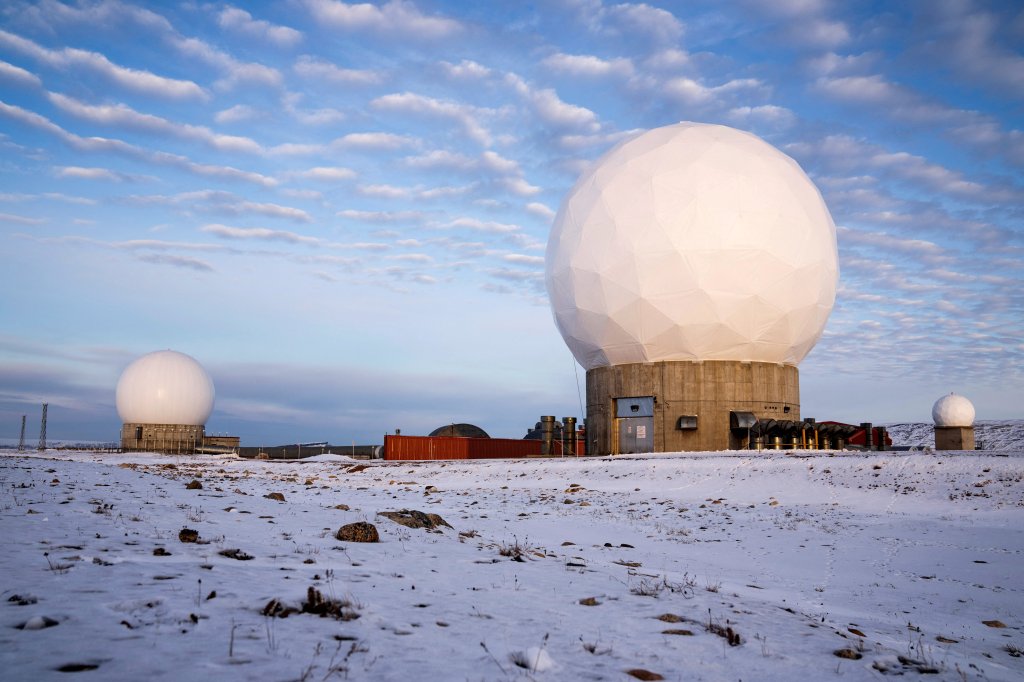
US Domain Awareness in the Arctic

US Domain Awareness in the Arctic

The Arctic Circle is not the frozen frontier of geopolitical irrelevance it once was. Climate change has rendered new shipping lanes navigable, newly discovered hydrocarbon reserves accessible, and strategic chokepoints suddenly contestable. The region is quickly becoming “a theater of global competition – a development that has accelerated since Russia’s 2022 invasion of Ukraine.”¹ For the U.S. and its allies, the question is no longer whether the Arctic matters strategically, but whether we possess the domain awareness necessary to understand, deter, and, if necessary, respond to adversary actions in an unforgiving environment. 

The lessons of Crimea loom large when it comes to the Arctic. Leading up to 2014, Russia demonstrated how a combination of ambiguity, deniability, and the exploitation of surveillance gaps – coming together in what we call “greyzone” or “hybrid” warfare – could allow a great power to redraw borders before the international community could mount a coherent response. The Arctic presents similar vulnerabilities, perhaps even more acute given its vastness and remoteness. Russia is using these grayzone tactics, including sabotage of undersea cables, GPS jamming, and military intimidation, to undermine NATO’s situational awareness and threaten critical infrastructure that Europe and the U.S. depend on for communications and energy security. 

Moreover, Russia and China are increasingly collaborating across the Arctic, with China financing Russian liquified natural gas (LNG) development and the two nations deepening coast guard cooperation, creating a strategic partnership that challenges American interests in the region². These activities exploit gaps in U.S. and allied domain awareness, operating below the threshold of armed conflict in ways that are difficult to attribute and respond to – the same “little green men” ambiguity that enabled Russia’s successful annexation of Crimea in 2014. Addressing this challenge requires a fundamental reimagining of how America and its partners monitor, understand, and operate in the High North. 

The Arctic’s strategic significance stems from multiple converging factors. First, the Northern Sea Route (NSR), running from the Bering Strait to the Kara Sea, offers the potential to dramatically reduce shipping distances between Asia and Europe. Russia has prioritized development of this corridor, viewing it as essential to its economic future. At the same time, Russia needs the NSR to operate peacefully because industry won’t invest in places where there is threat of conflict. Second, the Arctic harbors enormous energy resources. The U.S. Geological Survey, 30% of the world’s undiscovered gas and 13% of oil, remain beneath Arctic waters³, with China emerging as a major investor in Russia’s LNG projects in the Kara Sea region. This growing Sino-Russian partnership in the Arctic reflects broader joint security interests that pose challenges to American interests throughout the Arctic. 

The Barents Sea – bounded by Norway, Sweden, Finland, and Russia’s Kola Peninsula represents perhaps the most contested maritime space in the High North. Russia’s Northern Fleet, its premier naval force, operates from this region, and Moscow requires freedom of navigation to project power into the Atlantic. Thus, the Barents is effectively the most conflicted spot in the Arctic. Prior to Russia’s invasion of Ukraine, countries in the Arctic, including the U.S. and Russia, maintained channels of cooperation through the Arctic Council. Over the past two years Norway has tried to keep the council afloat, but the breakdown in relations with Russia rendered it largely ineffective⁴. Finland and Sweden, previously militarily non-aligned, have joined NATO since 2022, placing seven of the eight Arctic states under the same security umbrella. 

The 2014 annexation of Crimea offers a sobering lesson for understanding how adversaries might exploit domain awareness gaps. Russia’s operation combined special operations forces, the infamous Russian “little green men” without insignia that began appearing in Crimea, with information warfare and the mobilization of local proxies. The success of Russia’s Crimea operation lay in its ambiguity. By employing unmarked troops and plausible deniability, Moscow created a situation where Western governments struggled to attribute actions and coordinate responses within their legal and institutional frameworks. Russian grayzone tactics take place below the threshold of armed conflict, making them difficult for Western governments to respond to within the limits of their own precedent and frameworks⁵. Essentially, grayzone warfare is everything up to the point of escalation. The annexation of Crimea was not full on march it exploited the seams between peace and war to achieve strategic objectives before opponents could effectively respond. 

The parallels to Arctic vulnerabilities are striking. The Svalbard archipelago, for instance, presents what researchers describe as a potential venue for hybrid operations, albeit ones that currently fall short of warfare⁶. The 1920 Svalbard Treaty gives Russia legitimate rights to maintain a presence on the archipelago – rights that some observers worry could be exploited in ways reminiscent of Crimea. There is potential that Russia bolsters its legitimate presence in Svalbard on, one hand, while raising tensions in maritime space on the other. Russia also exploits Article 234 of UNCLOS⁷, the “ice-covered areas” exception, to assert expansive regulatory control over the Northern Sea Route, treating what should be international waters as effectively Russian-controlled territory by requiring mandatory icebreaker escorts, permits, and fees for transiting vessels. This unilateral regulatory regime challenges freedom of navigation principles. This gives Russia both economic leverage and intelligence on all maritime traffic through the Arctic’s most viable shipping corridor. Additionally, Russia refuses to recognize Norway’s authority to enforce regulations in Svalbard’s Fisheries Protection Zone⁸, exploiting legal ambiguities in the 1920 Treaty to conduct operations while claiming Norway lacks jurisdiction to inspect or arrest Russian vessels. These legal maneuvers allow Russia to advance its strategic interests under the guise of legitimate international law, creating gray zones that complicate Western responses and undermine the rules-based order in the Arctic. 

The U.S.’s situational awareness, or lack thereof, is a vulnerability of particular significance. The Arctic states lack independent command, control, communications, computers, intelligence, surveillance, and reconnaissance (C4ISR) capability. Instead, they remain “dependent on vulnerable undersea communications infrastructure, or space-based capabilities that are relatively scarce and characterized by intra-alliance dependency on the United States”⁹. Moreover, the space domain presents unique challenges in the Arctic. High latitude creates coverage gaps for many satellite systems, while electromagnetic disruptions and extended night cycles compound remote sensing difficulties. The U.S. is generally lacking Arctic-specific geospatial capacities, and our allies in the North are increasingly reliant on the weak infrastructure we currently maintain. 

In the waters, America’s icebreaker ship deficit remains a persistent concern. The U.S. Coast Guard operates only two polar icebreakers: the heavy icebreaker Polar Star, which is dedicated primarily to Antarctic operations, and the medium icebreaker Healy¹⁰. Russia, by contrast, operates nearly sixty icebreakers, including seven nuclear-powered vessels capable of operating year-round in the harshest ice conditions. Perhaps most concerning are the gaps in undersea surveillance and communications infrastructure. In January 2022, one of two critical fiber optic cables connecting Svalbard to mainland Norway was severed after Russian fishing vessels operated in the area. Similar incidents have occurred throughout the Nordic region, with cables and pipelines targeted in what appears to be a pattern of gray zone activity¹¹. 

The accession of Finland and Sweden to NATO represents a transformative development for Arctic security. These nations possess significant military capabilities and deep experience operating in Arctic conditions. Finland’s leadership in icebreaker construction – producing vessels faster and at lower cost than any other nation – and Sweden’s elite submarine fleet provide crucial capabilities that complement American strengths. However, effective use of these nation’s quantitative military edge (QME) requires cooperation between U.S. allies in the Arctic region, the US Coast Guard, indigenous communities, and private-sector manufacturers. Effective Arctic operations require not just hardware but also the institutional knowledge and cultural competence with indigenous communities in the High North to operate in one of Earth’s most demanding environments. As of now, the U.S. has contained China from the Arctic largely as a result of indigenous knowledge. 

Recent developments demonstrate this evolving allied integration, without Russia, in action. Finland recently hosted NATO’s first Arctic Space Forum¹², where allied nations explored how space capabilities can strengthen situational awareness, resilience, and deterrence in the North. The Finnish ICEYE and Sweden’s Space Corporation have signed agreements to develop cooperation on synthetic aperture radar capabilities that can see through Arctic cloud coverage and provide near-real-time imagery of the region. Drawing from the lessons of East Europe, including both the 2014 Crimea operation and the ongoing Russo-Ukrainian War, several priorities emerge for enhancing American and allied domain awareness in the Arctic. 

First, the U.S. must work with its allies to bolster space-based surveillance through resilient, redundant systems. Space capabilities are necessary to fill important gaps in Arctic C4ISR architecture; completing a constellation of full-coverage satellites requires aggressive research and development. However, this is a cause that the U.S. would only benefit from given the enhanced domain awareness it gains in the Northern Command and European Command. Ukraine has demonstrated that advanced satellite capabilities, particularly in low Earth orbit, prove highly resilient against non-kinetic counterspace attacks. Investments in radar satellites capable of Arctic observation should be prioritized, with attention to developing independent European capabilities to reduce over-reliance on American systems. 

The next step is to protect critical undersea infrastructure. The pattern of cable and pipeline sabotage in Nordic waters demands a coordinated response. Norway has already deployed its Home Guard to protect critical maritime infrastructure, supported by NATO ship patrols¹³. This model should be expanded throughout the Arctic region, with particular attention to the cables connecting Arctic communities to the outside world. The central lesson of Crimea is that ambiguity benefits the aggressor. NATO and its Arctic members must develop mechanisms for rapidly attributing and responding to hybrid threats, including legal frameworks that can keep pace with activities that deliberately blur the line between peace and war. 

Importantly, long-lasting cooperation in the Arctic requires co-production of knowledge with allied partners and indigenous communities. Arctic operations require expertise that cannot be acquired quickly, and the United States must invest in sustained partnerships that build this knowledge base over time. The Arctic is not destined for conflict. Russia needs the Northern Sea Route to be peaceful for commercial purposes, and collective economic interests in regional stability provide some foundation for cooperation. But history reminds us that adversaries exploit gaps in attention, capability, and awareness to achieve strategic objectives before defenders can respond. Unchecked aggression and security concerns below the threshold of conflict allow adversaries to undermine U.S. priority interests and advantages in the competitive continuum that undermines territorial sovereignty, freedom of navigation, and international law. Domain awareness is not merely a technical capability; it is the foundation upon which deterrence rests. Russia’s hybrid tactics are increasing in both frequency and severity in the Arctic, and the Sino-Russian partnership in the region reflects joint security interests that challenge American primacy. With Finland and Sweden now in NATO, the alliance possesses unprecedented capabilities to address these challenges. Even so, peace is only possible if they can garner the political will and strategic focus to close the domain awareness gaps that persist throughout the High North.

The Arctic Circle is not the frozen frontier of geopolitical irrelevance it once was. Climate change has rendered new shipping lanes navigable, newly discovered hydrocarbon reserves accessible, and strategic chokepoints suddenly contestable. The region is quickly becoming “a theater of global competition – a development that has accelerated since Russia’s 2022 invasion of Ukraine.” For the U.S. and its allies, the question is no longer whether the Arctic matters strategically, but whether we possess the domain awareness necessary to understand, deter, and, if necessary, respond to adversary actions in an unforgiving environment.

The lessons of Crimea loom large when it comes to the Arctic. Leading up to 2014, Russia demonstrated how a combination of ambiguity, deniability, and the exploitation of surveillance gaps – coming together in what we call “greyzone” or “hybrid” warfare – could allow a great power to redraw borders before the international community could mount a coherent response. The Arctic presents similar vulnerabilities, perhaps even more acute given its vastness and remoteness. Russia is using these grayzone tactics, including sabotage of undersea cables, GPS jamming, and military intimidation, to undermine NATO’s situational awareness and threaten critical infrastructure that Europe and the U.S. depend on for communications and energy security. 

Moreover, Russia and China are increasingly collaborating across the Arctic, with China financing Russian liquified natural gas (LNG) development and the two nations deepening coast guard cooperation, creating a strategic partnership that challenges American interests in the region. These activities exploit gaps in U.S. and allied domain awareness, operating below the threshold of armed conflict in ways that are difficult to attribute and respond to – the same “little green men” ambiguity that enabled Russia’s successful annexation of Crimea in 2014. Addressing this challenge requires a fundamental reimagining of how America and its partners monitor, understand, and operate in the High North.

The Arctic’s strategic significance stems from multiple converging factors. First, the Northern Sea Route (NSR), running from the Bering Strait to the Kara Sea, offers the potential to dramatically reduce shipping distances between Asia and Europe. Russia has prioritized development of this corridor, viewing it as essential to its economic future. At the same time, Russia needs the NSR to operate peacefully because industry won’t invest in places where there is threat of conflict. Second, the Arctic harbors enormous energy resources. The U.S. Geological Survey, 30% of the world’s undiscovered gas and 13% of oil, remain beneath Arctic waters, with China emerging as a major investor in Russia’s LNG projects in the Kara Sea region. This growing Sino-Russian partnership in the Arctic reflects broader joint security interests that pose challenges to American interests throughout the Arctic.

The Barents Sea – bounded by Norway, Sweden, Finland, and Russia’s Kola Peninsula – represents perhaps the most contested maritime space in the High North. Russia’s Northern Fleet, its premier naval force, operates from this region, and Moscow requires freedom of navigation to project power into the Atlantic. Thus, the Barents is effectively the most conflicted spot in the Arctic. Prior to Russia’s invasion of Ukraine, countries in the Arctic, including the U.S. and Russia, maintained channels of cooperation through the Arctic Council. Over the past two years Norway has tried to keep the council afloat, but the breakdown in relations with Russia rendered it largely ineffective. Finland and Sweden, previously militarily non-aligned, have joined NATO since 2022, placing seven of the eight Arctic states under the same security umbrella. 

The 2014 annexation of Crimea offers a sobering lesson for understanding how adversaries might exploit domain awareness gaps. Russia’s operation combined special operations forces, the infamous Russian “little green men” without insignia that began appearing in Crimea, with information warfare and the mobilization of local proxies. 

The success of Russia’s Crimea operation lay in its ambiguity. By employing unmarked troops and plausible deniability, Moscow created a situation where Western governments struggled to attribute actions and coordinate responses within their legal and institutional frameworks. Russian grayzone tactics take place below the threshold of armed conflict, making them difficult for Western governments to respond to within the limits of their own precedent and frameworks. Essentially, grayzone warfare is everything up to the point of escalation. The annexation of Crimea was not full on march  – it exploited the seams between peace and war to achieve strategic objectives before opponents could effectively respond.

The parallels to Arctic vulnerabilities are striking. The Svalbard archipelago, for instance, presents what researchers describe as a potential venue for hybrid operations, albeit ones that currently fall short of warfare. The 1920 Svalbard Treaty gives Russia legitimate rights to maintain a presence on the archipelago – rights that some observers worry could be exploited in ways reminiscent of Crimea. There is potential that Russia bolsters its legitimate presence in Svalbard on, one hand, while raising tensions in maritime space on the other. 

Russia also exploits Article 234 of UNCLOS, the “ice-covered areas” exception, to assert expansive regulatory control over the Northern Sea Route, treating what should be international waters as effectively Russian-controlled territory by requiring mandatory icebreaker escorts, permits, and fees for transiting vessels. This unilateral regulatory regime challenges freedom of navigation principles. This gives Russia both economic leverage and intelligence on all maritime traffic through the Arctic’s most viable shipping corridor. Additionally, Russia refuses to recognize Norway’s authority to enforce regulations in Svalbard’s Fisheries Protection Zone, exploiting legal ambiguities in the 1920 Treaty to conduct operations while claiming Norway lacks jurisdiction to inspect or arrest Russian vessels. These legal maneuvers allow Russia to advance its strategic interests under the guise of legitimate international law, creating gray zones that complicate Western responses and undermine the rules-based order in the Arctic.

The U.S.’s situational awareness, or lack thereof, is a vulnerability of particular significance. The Arctic states lack independent command, control, communications, computers, intelligence, surveillance, and reconnaissance (C4ISR) capability. Instead, they remain “dependent on vulnerable undersea communications infrastructure, or space-based capabilities that are relatively scarce and characterized by intra-alliance dependency on the United States”. Moreover, the space domain presents unique challenges in the Arctic. High latitude creates coverage gaps for many satellite systems, while electromagnetic disruptions and extended night cycles compound remote sensing difficulties. The U.S. is generally lacking Arctic-specific geospatial capacities, and our allies in the North are increasingly reliant on the weak infrastructure we currently maintain. 

In the waters, America’s icebreaker ship deficit remains a persistent concern. The U.S. Coast Guard operates only two polar icebreakers: the heavy icebreaker Polar Star, which is dedicated primarily to Antarctic operations, and the medium icebreaker Healy. Russia, by contrast, operates nearly sixty icebreakers, including seven nuclear-powered vessels capable of operating year-round in the harshest ice conditions. Perhaps most concerning are the gaps in undersea surveillance and communications infrastructure. In January 2022, one of two critical fiber optic cables connecting Svalbard to mainland Norway was severed after Russian fishing vessels operated in the area. Similar incidents have occurred throughout the Nordic region, with cables and pipelines targeted in what appears to be a pattern of gray zone activity. 

The accession of Finland and Sweden to NATO represents a transformative development for Arctic security. These nations possess significant military capabilities and deep experience operating in Arctic conditions. Finland’s leadership in icebreaker construction – producing vessels faster and at lower cost than any other nation – and Sweden’s elite submarine fleet provide crucial capabilities that complement American strengths. However, effective use of these nation’s quantitative military edge (QME) requires cooperation between U.S. allies in the Arctic region, theUS Coast Guard, indigenous communities, and private-sector manufacturers. Effective Arctic operations require not just hardware but also the institutional knowledge and cultural competence with indigenous communities in the High North to operate in one of Earth’s most demanding environments. As of now, the U.S. has contained China from the Arctic largely as a result of indigenous knowledge.

Recent developments demonstrate this evolving allied integration, without Russia, in action. Finland recently hosted NATO’s first Arctic Space Forum, where allied nations explored how space capabilities can strengthen situational awareness, resilience, and deterrence in the North. The Finnish ICEYE and Sweden’s Space Corporation have signed agreements to develop cooperation on synthetic aperture radar capabilities that can see through Arctic cloud coverage and provide near-real-time imagery of the region.

Drawing from the lessons of East Europe, including both the 2014 Crimea operation and the ongoing Russo-Ukrainian War, several priorities emerge for enhancing American and allied domain awareness in the Arctic. First, the U.S. must work with its allies to bolster space-based surveillance through resilient, redundant systems. Space capabilities are necessary to fill important gaps in Arctic C4ISR architecture; completing a constellation of full-coverage satellites requires aggressive research and development. However, this is a cause that the U.S. would only benefit from given the enhanced domain awareness it gains in the Northern Command and European Command. Ukraine has demonstrated that advanced satellite capabilities, particularly in low Earth orbit, prove highly resilient against non-kinetic counterspace attacks. Investments in radar satellites capable of Arctic observation should be prioritized, with attention to developing independent European capabilities to reduce over-reliance on American systems.

The next step is to protect critical undersea infrastructure. The pattern of cable and pipeline sabotage in Nordic waters demands a coordinated response. Norway has already deployed its Home Guard to protect critical maritime infrastructure, supported by NATO ship patrols. This model should be expanded throughout the Arctic region, with particular attention to the cables connecting Arctic communities to the outside world. The central lesson of Crimea is that ambiguity benefits the aggressor. NATO and its Arctic members must develop mechanisms for rapidly attributing and responding to hybrid threats, including legal frameworks that can keep pace with activities that deliberately blur the line between peace and war.

Importantly, long-lasting cooperation in the Arctic requires co-production of knowledge with allied partners and indigenous communities. Arctic operations require expertise that cannot be acquired quickly, and the United States must invest in sustained partnerships that build this knowledge base over time. The Arctic is not destined for conflict. Russia needs the Northern Sea Route to be peaceful for commercial purposes, and collective economic interests in regional stability provide some foundation for cooperation. But history reminds us that adversaries exploit gaps in attention, capability, and awareness to achieve strategic objectives before defenders can respond. Unchecked aggression and security concerns below the threshold of conflict allow adversaries to undermine U.S. priority interests and advantages in the competitive continuum that undermines territorial sovereignty, freedom of navigation, and international law. 

Domain awareness is not merely a technical capability; it is the foundation upon which deterrence rests. Russia’s hybrid tactics are increasing in both frequency and severity in the Arctic, and the Sino-Russian partnership in the region reflects joint security interests that challenge American primacy. With Finland and Sweden now in NATO, the alliance possesses unprecedented capabilities to address these challenges. Even so, peace is only possible if they can garner the political will and strategic focus to close the domain awareness gaps that persist throughout the High North.

Work Cited

1 Heather A. Conley and Linnea Sandin, “Addressing Arctic Vulnerabilities,” Center for Strategic and International Studies, May 15, 2024, https://www.csis.org/analysis/addressing-arctic-vulnerabilities.

2 “Arctic Energy Security,” Center for Strategic and International Studies, June 20, 2024, https://www.csis.org/analysis/arctic-energy-security.

3 Kenneth J. Bird et al., “Circum-Arctic Resource Appraisal: Estimates of Undiscovered Oil and Gas North of the Arctic Circle,” Science 321, no. 5885 (2008): 367–70, https://www.science.org/doi/10.1126/science.1169467.

4 Luke Coffey, “How a Big Freeze Descended on the Arctic Council,” Hudson Institute, May 16, 2025, https://www.hudson.org/international-organizations/how-big-freeze-descended-arctic-council-luke-coffey.

5 Minna Ålander, “Death by a Thousand Paper Cuts: Lessons from the Nordic-Baltic Region on Countering Russian Gray Zone Aggression,” Carnegie Endowment for International Peace, November 14, 2024, https://carnegieendowment.org/research/2024/11/russia-gray-zone-aggression-baltic-nordic?lang=en.

6 Arild Moe and Olav Schram Stokke, “Asian Arctic Interests and the Northern Sea Route: Between Economic Expansion and Geopolitical Constraint,” The Scandinavian Journal of Military Studies 7, no. 1 (2024): 1–15, https://sjms.nu/articles/233/files/6687c6b4181f3.pdf.

7 Alex Kostin, “A Case Study of Russia’s Arctic Posture,” Lawfare, February 14, 2022, https://www.lawfaremedia.org/article/case-study-russias-arctic-posture.

8 Amanda H. Lynch and Charles H. Norchi, “Sea Ice and the Law of the Sea: The Myth of Article 234,” Ocean and Coastal Law Journal 29, no. 2 (2024): 367–98, https://digitalcommons.mainelaw.maine.edu/cgi/viewcontent.cgi?article=1406&context=oclj.

9 Conley and Sandin, “Addressing Arctic Vulnerabilities”.

10 Lee Ferran, “After Trump’s Promise of 40 ‘Big’ Icebreakers, Coast Guard Says Eight or Nine Will Do,” Breaking Defense, April 8, 2025, https://breakingdefense.com/2025/04/after-trumps-promise-of-40-big-icebreakers-coast-guard-says-eight-or-nine-will-do/.

11 “Hybrid Attacks Rise on Undersea Cables in Baltic and Arctic Regions,” The Jamestown Foundation, December 8, 2025, https://jamestown.org/hybrid-attacks-rise-on-undersea-cables-in-baltic-and-arctic-regions/.

12 “Finland Hosts NATO’s Arctic Space Forum,” Finnish Government, November 11, 2025, https://valtioneuvosto.fi/en/-/236553176/finland-hosts-nato-s-arctic-space-forum.

13 “How the Baltic Sea Nations Have Tackled Suspicious Cable Cuts,” Atlantic Council, November 26, 2025, https://www.atlanticcouncil.org/in-depth-research-reports/issue-brief/how-the-baltic-sea-nations-have-tackled-suspicious-cable-cuts/.