
Part I:
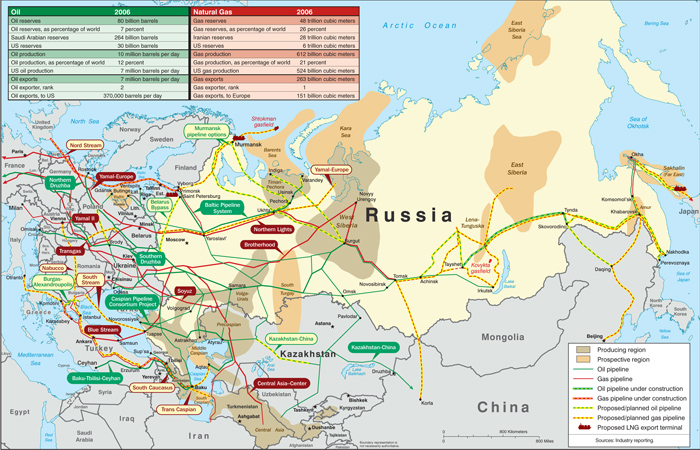
Russian oil is as essential to Russia as it is its greatest vulnerability. Before the full invasion of Ukraine, Russia had been able to export oil and natural gas with relative freedom. Organization for Economic Co-operation and Development (OECD) countries in Europe imported 34% of their oil on average from Russia. Most European states are members of OECD, with the exception of the Balkan countries between Greece and Hungary and the Former Soviet Union (FSU). At the same time, 45% of Russia’s federal budget in 2021 came from oil.1 The Russian state and Russia’s oil resources are intimately linked. Of the major oil companies in Russia, the two main pipeline operators, Gazprom Neft and Transneft, as well as Russia’s leading oil and natural gas companies, Rosneft and Gazprom, are state owned and the oil companies which are not state owned fall under heavy political pressure from the Russian government.2
As a result, one cannot separate the Russian oil trade from Russia’s geopolitical position. It is oil and natural gas which have funded Russia’s ambitions from Vladivostok in the east to Odessa in the west. That is not to say that Russia is not connected to the world in other ways, but the role of Russia’s natural resources is the most profound to its budget which ultimately holds together Russia’s internal social stability, external wars, and campaign of hybrid warfare against NATO and its allies. Given the war in Ukraine has been transpiring since 2014, important questions have emerged: why are we only now getting tough on Russia about oil? What role do countries outside of Europe play in funding Russia’s war? The much feted announcement of secondary sanctions gives us a window into this world of energy politics. In particular, it focuses us away from the usual suspect of China and instead puts our eyes firmly on India, a state which has striven to maintain a level of neutrality in world affairs.
Part II:
India is worth focusing on in this story of Russia’s energy industry because while China is Russia’s largest customer, it is not as emblematic of Russia’s overall diplomatic strategy to retain a diverse customer base that can shield them from fluctuations in geopolitical goodwill emerging from Russia’s grand strategy in the former Soviet Union. I will first discuss the state of Russo-Indian relations prior to the secondary sanctions, then the outcome of secondary sanctions for India’s economy, and finish with how the consequences of secondary sanctions will affect the economy of Russia and their ability to wage war, as well as the broader implications of secondary sanctions becoming a part of the toolbox of international sanctions regimes.
The Russo-Indian strategic partnership was a product of the Cold War. Much as the U.S. and the PRC found rapprochement due to a shared enemy in the USSR, India and Russia have aligned due to a shared suspicion of China. Since the Cold War, while the original impetus for the alliance has diminished due to increasing trade relations with China for India and Russia alike, the strategic partnership had in some ways been able to strengthen due to shared economic and geopolitical interests.3 In the strategic arena, Russia and India have shared enemies in political Islam, which is problematic in the FSU states in Central Asia and the South Asian region alike. Russia and India also have a shared place in BRICS (Brazil, Russia, India, China, South Africa), promoting a “multipolar world order” which better represents the interests and spheres of influence of emerging economies. This leadership in promoting multipolarity also aligns with the general strategy of Russia to position itself as a counter-influence to the West and leading power for the global south. These aligning interests help produce the political impetus in both countries to continue a stable relationship. This is even the case in New Delhi, where deepening ties to the US have not displaced their traditional relationship with Russia. At the same time, apprehension towards China in Russia has strengthened political will in Moscow to maintain and deepen alternative partnerships.
It is the economic relationship between India and Russia which is truly key at the moment. Since the Ukraine war, India has increased its imports of Russian oil—37% of India’s oil imports are from Russia, and India themselves are the 3rd largest oil importer.4 Russia has facilitated this trade using a “shadow fleet” of oil tankers which have circumvented attempted price caps and other sanctions on Russian oil implemented by the U.S. and its allies.5 While overall levels of exports declined by about half following the war, Russia’s alternative partners have given Russia a stable revenue stream that has not declined in response to the length of the war or accusations of criminality on the part of the Russian Federation.6
What changes the calculus of the Russo-Indian partnership, and indeed any of the partnerships Russia retains other than with North Korea, is a robust secondary sanctions regime. In the case of Trump this has included tariffs as high as 50% towards countries which continue to purchase Russian oil, though his policies are defined by unpredictable exemptions and delays. These tariffs have had an immediately negative impact on Russia’s export standings with India, China, and Turkey, which account for 95% of Russia’s crude exports. This attests to the limitations of Russia’s diversification of exports strategy, which has aimed to reduce the percentage of revenue Russia derives from advanced western economies willing to sanction them.7 A major consequence of the secondary sanctions regime has been that refineries among all of Russia’s partners are looking to alternative sources of oil, which in the long-run will diminish Russia’s oil exports beyond the initial decline caused by the announcement of secondary sanctions.
Part of the reason why secondary sanctions have been effective is because of the proven impact of tariffs at disrupting trade and destroying value. Indian exports to the US fell nearly 12% year on year, and that’s considering that, in 2024, India exported $84 billion worth of goods to the US. These tariffs also particularly hit the agricultural sector, which accounted for $5.7 billion of value in 2024. The economic damage, especially among farmers, constituted a political threat to the internal political interests of Modi’s government—made especially prevalent by the massive protests which ensued the last time farmers felt their interests were heavily threatened.8 At the same time, these economic risks have dug into India’s efforts to develop into a higher income country. While tariffs on agriculture were eventually lifted to some extent, the uncertainty and initial effects of the tariffs have not gone away for India’s agricultural sector.9
Tariffs put pressure on something Russia is unable to control: other countries. If the cost of doing business with Russia is higher than the benefit of importing Russian oil, Russia will be out of customers, other than the states that don’t trade with the West to a significant degree and therefore would not be targetable by secondary sanctions. Russia has been able to retain customers in Turkey, China, and India despite a comprehensive effort by the West to isolate Russia from the global economy; however, it has proven unable to expand exports to the extent that it replaced lost demand. If the demand of Russia’s remaining large customers is targeted, it is very unlikely that Russia would be able to recoup lost exports through other countries that engage in minimal trade with the West. Russia’s energy export market will be at a point of no return if they are forced to seek alternative partners to the larger emerging markets that they fell back on following the start of major European oil sanctions; there is no second fallback market for Russia when it comes to China or India or Turkey.10 Tariffs have served as a blunt way to strike at the states which have retained partnerships with Russia, because they can step around sanctions towards Russia in order to keep importing oil. Seeing how these secondary sanctions can produce an immediate effect, the use of secondary sanctions on specific products such as oil or rare resources could be a more commonly employed instrument against rogue states, as they target non-compliant demand side activities based on the activities of states de facto. The traditional non-alignment of India and many other states is being challenged by this policy, which is attempting to globalize sanctions regimes by utilizing direct economic power. We could be entering into an era of renewed economic competition between great powers, which may force states like India to pick one partner or the other rather than maintain a plethora of security and economic relationships across spheres of influence and political systems.
Part III:
Should this sanctions regime hold, we should expect it to severely affect Russia’s budget and its ability to wage war into the future. While there have been rumbles about if the world can survive without Russian oil, we can see through Europe’s decoupling from Russian oil and natural gas over time that the world can indeed do without Russia. This begs an important question: can Russia do without the world, and for how long?
Just like blood diamonds became a cause celebre of those concerned about the proliferation of violent conflict in the world, the story of Russia’s oil will be an enduring narrative when it comes to who is worthy of participating in valuable commodities exports. The justification of Russia’s participation in the global oil market on the basis of economic welfare has substantially depreciated in value as a talking point in Europe when previously projects like the Nord-Stream had enjoyed support and funding. In a world concerned with stopping the spread of conflicts, it is crucial to identify the resources which are empowering actors driving violations of international law. Aggressive action by states is sustained by the inaction of other states. As a result, the fate of secondary sanctions against Russian oil will be a key test of the ability of the Liberal International Order to punish crimes of aggression and preserve peace among nations. If the complex of institutions built following the Second World War cannot adapt to stop threats to peace in the present, it will struggle to maintain relevance and moral weight as the world situation grows ever more challenging while the need for forceful, human rights-minded leadership becomes more urgent.
Work Cited
1. “Energy Fact Sheet, Why Does Russian Oil and Gas Matter?,” International Energy Agency, March 21, 2022, https://www.iea.org/articles/energy-fact-sheet-why-does-russian-oil-and-gas-matter.
2. “Energy Fact Sheet.”
3. Rouben Azizian, “Russia-India Relations: Stability Amidst Strategic Uncertainty” (Monterey, CA: Naval Postgraduate School, 2004), https://apps.dtic.mil/sti/tr/pdf/ADA591913.pdf.
4. Soutik Biswas, “Cheap Oil, High Stakes: Can India Do Without Russia?,” BBC News, October 16, 2025, https://www.bbc.com/news/articles/c1e3786p01qo.
5. CFR Editors, “Three Years of War Against Ukraine: Are Sanctions Making a Difference?,” Council on Foreign Relations, October 23, 2025, https://www.cfr.org/in-brief/three-years-war-ukraine-are-sanctions-against-russia-making-difference.
6. CFR Editors, “Three Years of War.”
7. TOI Business Desk, “Trump Sanctions Bite! Oil Heading to India, China Falls Steeply; but Can the World Permanently Ignore Russian Crude?,” Times of India, November 6, 2025, https://timesofindia.indiatimes.com/business/india-business/trump-sanctions-bite-oil-heading-to-india-china-falls-steeply-but-can-the-world-permanently-ignore-russian-crude/articleshow/125105089.cms.
8. “Farmers Across India Protest Against Farm Bills: In Photos,” Hindustan Times, September 28, 2020, https://www.hindustantimes.com/india-news/farmers-across-india-protest-against-farm-bills-in-photos/story-cQBssQF5wg7Cc5AhgJPxQM.html.
9. Manoj Kumar and Mayank Bhardwaj, “Trump Tariff Rollback Offers Relief for Indian Farmers,” Reuters, November 16, 2025, https://www.reuters.com/world/india/trump-tariff-rollback-offers-relief-indian-farmers-2025-11-16/.
10. CFR Editors, “Three Years of War.”
 Foreign Affairs Review