
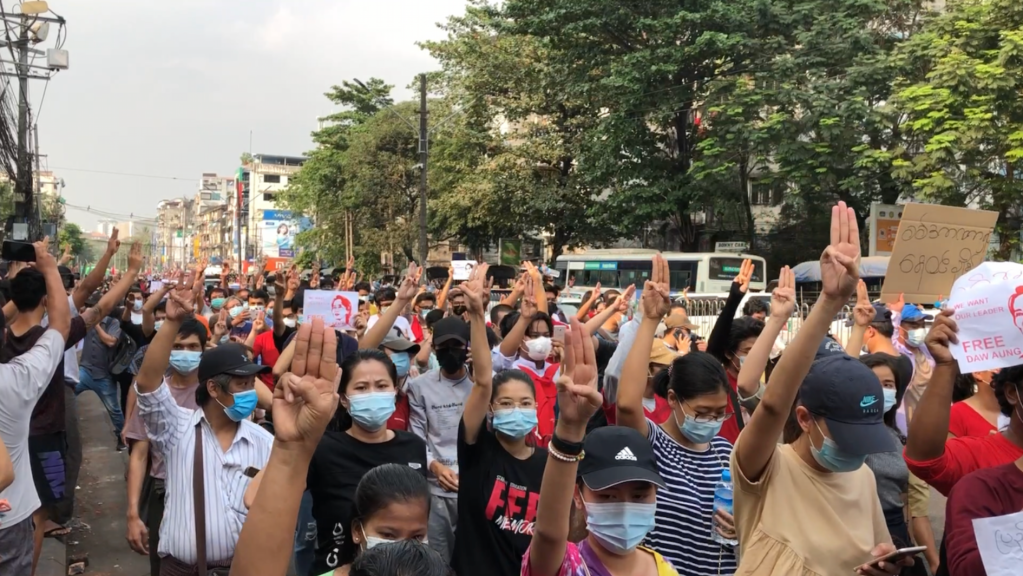
In April of 2021, Southeast Asian leaders met in Jakarta to establish the Five-Point Consensus, promising an immediate end to the violence in Myanmar.1 The military’s seizure of power in Myanmar on February 1st, 2021, had thrown the Association of Southeast Asian Nations (ASEAN) into a protracted crisis. The Five-Point Consensus (5PC) focuses on diplomacy, yet the subsequent four years revealed the institutional design issues within ASEAN and the demands of a fast-moving civil war. While ASEAN maintained unity through a common framework with developed humanitarian channels, it struggled to produce effective solutions capable of compelling compliance in Myanmar.
The Five-Point Consensus’s strength lay in its establishment of a common vocabulary for regional engagement and a division of labor. It provided political facilitation through a special rotating envoy and relief through the ASEAN Coordinating Centre for Humanitarian Assistance (AHA). However, the major weaknesses of the AHA have been evident since its inception: the absence of working timelines, verification modalities, or any contingent consequences for Myanmar in the event of non-compliance. Despite these weaknesses, the Five-Point Consensus rapidly became a touchstone for all subsequent ASEAN statements and reviews, including the Kuala Lumpur “Leaders’ Review and Decision on the Implementation of the 5PC,” which acknowledged the incremental steps the Five-Point Consensus was making even with continued violence and a growing humanitarian crisis.
Although ASEAN lacks collective sanctions and operates simply by consensus, one of its most effective instruments of political pressure has been isolating the leaders of Myanmar. This strategy became evident in October 2021, when ASEAN decided against inviting Senior General Min Aung Hlaing to the annual leaders’ summit and instead offered a “non-political representative.”2 ASEAN’s unprecedented decision reflected and reinforced dissatisfaction with the junta’s non-compliance with the Five-Point Consensus. What was at first a calibrated isolation turned into implementation at the summit level, functioning as a reputational cost without rupturing the Charter’s collegial ethos or raising the politically fraught question of expulsion. Although excluding General Hlaing ultimately did not coerce any behavioral change on the ground in Myanmar, it still prevented regional normalization of the coup and preserved a minimal standard of participation towards the consensus created by ASEAN.
ASEAN’s exclusion of Myanmar may have been symbolic, but the humanitarian channel remained operational. The AHA was established under the ASEAN Agreement on Disaster Management and Emergency Response (AADMER) to coordinate disaster relief among member states and partners.3 The AHA was tasked by the 5PC to deliver assistance during a complex political emergency. However, the AHA’s responsibilities created an immediate mismatch in mandates as it was initially created to handle the logistics of dealing with natural disasters including the construction of warehouses, pre-positioned stocks, and coordination protocols. The AHA was not designed to deal with access negotiations with belligerents, nor was it meant to ensure impartial cross-line distribution in a civil war. Nonetheless, ASEAN utilized the AHA to create joint coordination with the Myanmar authorities to deliver supplies intermittently.
The limits of this approach were thrown into sharp relief after the 7.7-magnitude earthquake in early April 2025, when the AHA mobilized relief out of its DELSA regional warehouse but still faced many obstacles including permissions, checkpoints, and contested distributions.4 Updates from the AHA documented that deployments and values were delivered while the United Nations Statements and Security Council press materials simultaneously urged unimpeded access and the scaling of life-saving aid.5 The result of this was a functioning logistical pipeline significantly constricted by politics, which ASEAN could not unilaterally change.6
On October 27th, 2023, ethnic armed organizations in Myanmar fighting as the Three Brotherhood Alliance launched “Operation 1027,” a military offensive in the northern Shan State.7 Operation 1027 marked a major turning point in the civil war, disrupting the military’s logistics and seizing border trade locations. Most crucially, it reconfigured the political geography of any future peace settlements by empowering a broader ecosystem of armed and civic actors beyond Naypyidaw’s control. From that point onward, negotiations that were capital-centric would not be able to address issues on the ground—impactful arrangements would need to include the National Unity Government and multiple ethnic forces that administered localities and lifelines. ASEAN’s envoy diplomacy implicitly recognized the expansion of stakeholders, yet the bloc lacked an institutionalized format to incorporate them consistently. This complicated the implementation of The Five-Point Consensus’s foremost purpose—the cessation of violence.
Another challenge is that the yearly rotation of ASEAN’s Chair stalled peace operations in Myanmar. In 2023 Indonesia adopted a “quiet diplomacy” approach, publicly acknowledging the limited progress on discussions and ending the violence in Myanmar,8 at the same time that ASEAN admitted to achieving “no significant progress.” In 2024 Laos prioritized maintenance of the consensus and procedures by keeping the 5PC as an organizing principle, but still produced little new access or new dialogues.9 In 2025 Malaysia took a more proactive stance by emphasizing structured contacts with opposition stakeholders, highlighting the need to coordinate humanitarian access. Most importantly, it took the lead in the October 2025 Leaders’ Review text that reaffirmed the 5PC while pointing to improved coordination among current, previous, and incoming Chairs.10
The Five-Point Consensus’s special envoy was specifically designed to act as a diplomatic connection for discussion yet, because the envoy’s mandate was tied to the annual Chair, ASEAN became vulnerable. Diplomatic mediation requires long-term discussions and trust that is indivisible from personal relationships. However, the system of annual turnover will not work, especially for a conflict as fragmented as Myanmar’s. Recognizing the systematic issue, policy research led by the ISEAS-Yusof Ishak Institute concluded that it was imperative to re-examine the 5PC and lengthen each Chair’s tenure. Meanwhile, in 2025, ASEAN also took small steps toward coordination among the Chairs.11 The documents and associated reported meeting notes from Kuala Lumpur among the special envoys and consultations across the Chairs suggested movement towards continuity, even if a formal permanent envoy model is still under discussion. For outcomes to improve, it is necessary to promote envoy tenure and support capacity.12
The Association of Southeast Asian Nations sought and received public validation from the United Nations and key partners to support its central role in addressing the Myanmar crisis. Statements from the UN Secretary-General on October 27, 2025 at the ASEAN-UN Summit in Kuala Lumpur explicitly supported the implementation of the 5PC with coordination with the UN. The Security Council press statements from April of 2025 emphasized humanitarian urgency following the earthquake and the need to scale access and support regionally. ASEAN encountered many difficulties when attempting to provide said aid, as Myanmar employed sanctions, visa restrictions, and accountability tools beyond ASEAN’s comfort zone. Subsequently, the result was a division of labor that preserved ASEAN’s access but diluted the collective pressure of the committee. Additionally, it also allowed the junta to stall for time by exploiting the differences in approach among all the external players.
In April of 2025 a powerful earthquake shook Myanmar, creating even more humanitarian upheaval in addition to the ongoing civil war. The AHA quickly mobilized logistics, warehouses, and coordination, but access was strictly controlled particularly in terms of checkpoints, permit restrictions, and distrust of outside monitors which limited where aid could go. ASEAN reports listed what was delivered, and news outlets emphasized a few short-lived pauses in the fighting to allow aid through. However, the core issue was the issue of political controls with territory and permits rather than just logistics. Regarding the political end, ASEAN did not launch sustained talks among all member parties. The number of actors did expand following Operation 1027, yet the annual turnover of the special envoy made long-term continuity difficult. Excluding junta leaders from the top summits did damage to their standing and prevented normalization of the crisis but, without any economic or legal pressure, there was no change in behavior from Myanmar. ASEAN was able to maintain unity and provide some relief, but this did not alter any of the incentives driving the conflict of the civil war.
ASEAN’s failure to rewrite the 5PC has led to critical failures in providing aid throughout Myanmar; however, in 2025, developments point to practical adjustments. First, continuity of the 5PC is being treated as an operational priority. Among nations, coordination between current, previous, and incoming Chairs and more meetings of special envoys are intended to reduce the effects of the annual rotation, with growing discussions for a longer tenured envoy supported by a small technical team. Second, contact with non-state actors is increasingly accepted. Third, humanitarian operations are being separated from recognition debates. Whether these adjustments are enough to shift the junta’s behavior remains to be seen.
The junta’s plan to hold national elections starting in December 2025 presented ASEAN with a familiar issue. Public remarks by Malaysia’s foreign minister ahead of the October 2025 summit emphasized that the 5PC is straightforward in principle. The government planned to allow humanitarian access and engagement with all sides while acknowledging that ASEAN cannot stop the junta from proceeding. The Kuala Lumpur documents reaffirmed the goals of the 5PC and tied assessments of political steps to reductions in violence and inclusivity benchmarks. The ASEAN policy position preserved internal cohesion and avoided endorsing a wartime vote. Whether it can generate concrete concessions will depend on ASEAN’s ability to condition diplomatic access such as participation in meetings, engagement with envoys, and regional recognition of verifiable humanitarian and protection gains.
Between 2021 and 2025, ASEAN’s approach to the Myanmar crisis emphasized a realistic perspective of its limited leverage. The Five-Point Consensus provided a strong reference point and allowed for division of responsibilities between a rotating envoy and the AHA Centre assisted in humanitarian operations. During these four years, ASEAN maintained unity by conditioning summit access, avoiding normalizing the coup during regional forums, while organizing relief during distress. Despite these positions, ASEAN did not achieve sustained discussions, secure neutral cross-border access at scale, nor did it alter the positions of the war. Even so, incremental change can still be impactful if it is well structured. The 2025 cycle showcased ongoing attempts at making ASEAN’s “centrability” more effective by extending the envoy’s tenure and making sure to provide support, like a verification process to ensure that access and protection commitments are tracked, not just announced. If paired with clear diplomatic conditions such as tying participation and recognition to prisoner releases, monitored humanitarian corridors, or restraint around civilian sites, these steps would not end the war but they could marginally improve protection and create a framework for future negotiations.
Work Cited
1. Tang Siew Mun, “Re-examining ASEAN’s Five-Point Consensus on Myanmar,” Trends in Southeast Asia, no. 20 (2025), ISEAS-Yusof Ishak Institute, https://www.iseas.edu.sg/wp-content/uploads/2025/10/TRS20_25.pdf.
2. Lin Yang and Peh Hong Lim, “ASEAN Summit Opens without Myanmar Presence,” VOA News, October 26, 2021, https://www.voanews.com/a/asean-summit-opens-without-myanmar-presence-/6286818.html.
3. Ain Bandial, “ASEAN Excludes Myanmar Junta Leader from Summit in Rare Move,” Reuters, October 16, 2021, https://www.reuters.com/world/asia-pacific/asean-chair-brunei-confirms-junta-leader-not-invited-summit-2021-10-16/.
4. “ASEAN Leaders’ Review and Decision on the Implementation of the Five-Point Consensus,” ASEAN, October 2025, https://asean.org/wp-content/uploads/2025/10/Final-ASEAN-Leaders-Review-Decision-on-the-Implementation-of-5PC-2025_as-adopted.pdf.
5. “Chairman’s Statement on the ASEAN Leaders’ Meeting,” ASEAN, April 24, 2021, https://asean.org/wp-content/uploads/Chairmans-Statement-on-ALM-Five-Point-Consensus-24-April-2021-FINAL-a-1.pdf.
6. Olivia Le Poidevin, “Humanitarian Operation in Myanmar Hindered by Damaged Roads and Infrastructure, Says UN Agency,” Reuters, March 29, 2025, https://www.reuters.com/business/environment/humanitarian-operation-myanmar-hindered-by-damaged-roads-infrastructure-says-un-2025-03-29/.
7. Edna Tarigan and Jim Gomez, “Indonesia’s President Admits ASEAN Has Made No Progress on Myanmar Crisis,” The Diplomat, May 2023, https://thediplomat.com/2023/05/indonesias-president-admits-asean-has-made-no-progress-on-myanmar-crisis/.
8. Prasanta Kumar Dutta, Travis Hartman, Sudev Kiyada, and Ally J. Levine, “Mapping the Myanmar Earthquake,” Reuters, 2025, https://www.reuters.com/graphics/MYANMAR-QUAKE/gkvljjmwyvb/.
9. “Press Statement by the Chair of the ASEAN Foreign Ministers’ Retreat – 29 January 2024, Luang Prabang, Lao PDR,” ASEAN, January 29, 2024, https://reliefweb.int/report/myanmar/press-statement-chair-asean-foreign-ministers-retreat-29-january-2024-luang-prabang-lao-pdr.
10. “Secretary-General’s Remarks to the ASEAN-United Nations Summit [as Delivered],” United Nations, October 27, 2025, https://www.un.org/sg/en/content/sg/statements/2025-10-27/secretary-generals-remarks-the-asean-united-nations-summit-delivered.
11. “ASEAN Leaders’ Review and Decision on the Implementation of the Five-Point Consensus, Kuala Lumpur, Malaysia, 26 October 2025,” Ministry of Foreign Affairs Malaysia, October 26, 2025, https://www.kln.gov.my/web/guest/speeches-statements/-/asset_publisher/statement/content/asean-leaders-review-and-decision-on-the-implementation-of-the-five-point-consensus-kuala-lumpur-malaysia-26-october-2025.
12. Kyaw Hsan Hlaing and Naing Lin, “‘Operation 1027’: A Turning-Point for Myanmar’s Resistance Struggle?,” The Diplomat, October 2023, https://thediplomat.com/2023/10/operation-1027-a-turning-point-for-myanmars-resistance-struggle/.
 Foreign Affairs Review