
In May 2025, an Afghan refugee in Denver told me about a relative in Iran—a woman in the late stages of her pregnancy—who approached a hospital with severe preeclampsia, a serious complication. At the door, the staff demanded she pay a large sum to be allowed entry. Before treating her, they demanded another sum, and they kept doing the same again at each step. When her baby was finally delivered, they demanded the biggest sum of all to allow her to leave with him. She had paid the hospital everything she and her husband, who had recently been deported by Iran, had been able to gather. So, after two days of threatening, they turned her and her newborn in to immigration enforcement to be promptly deported.1
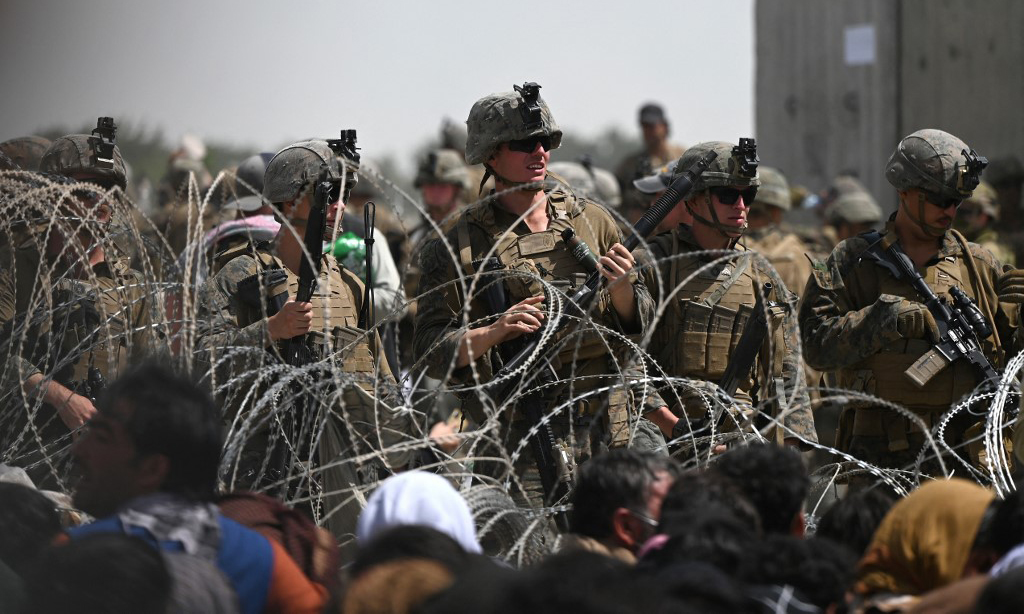
Four years earlier, on August 31, 2021, the last American plane had lifted off the ground of Hamid Karzai International Airport at 11:59 PM, leaving behind an estimated 96% of Special Immigrant Visa applicants and hundreds of thousands more Afghans who had worked side by side with Americans during over 20 years of war.2 The disorganized execution of the evacuation contributed to widespread injury and loss of life among those attempting to flee. One family was forced to watch as their mother was beaten at a Taliban checkpoint, another’s young daughter was trampled nearly to death, and countless more were murdered by a suicide bomber while desperately waiting at the airport gates.3
While readers may recognize and remember the scenes of the 2021 pullout from Afghanistan, the crisis never ended. The cameras just moved on. In the following four years, the conditions refugees faced only drastically deteriorated. During and after their sudden pullout, Western countries failed to keep promises to and uphold decent standards for vulnerable, at-risk populations, leaving them at the mercy of the Taliban and dire humanitarian conditions. Starting in 2023 and continuing to the present, these countries escalated their neglect of basic obligations, this time in the face of the violent deportations of millions by Iran and Pakistan back to a country marked by persecution, acute humanitarian need, and widespread food insecurity.
The Afghan refugee crisis does not just reflect on complicit countries, but on the international asylum system itself. It revealed that the system was designed in ways that make real protection impossible when it is needed most. The system isn’t just marred by structural flaws but repeatedly fails to perform its integral functions.
American Responsibility: A Moral and Strategic Failure
While the exact responsibilities of the countries involved in the 2001 invasion of Afghanistan and following 20 years of campaigns, peacekeeping, and reconstruction were complex and debated, even many of the most basic commitments were disregarded. A multitude of failings on the part of each country involved, including the U.S. and allies, contributed to the abandonment of more than one million Afghans facing a heightened risk of persecution by the Taliban.
Since the beginning of the war in 2001, employees of the US-led coalition in Afghanistan were frequently targeted by the Taliban and other militant groups.4 Following 2021, available reporting indicates that these threats intensified significantly. The U.S. acknowledged and addressed this problem in 2009 with the Afghan Allies Protection Act, establishing a path to Afghan special immigrant visas (SIVs) for individuals (and their families) at risk due to providing “faithful and valuable service to the US.”5 SIVs grant recipients permanent U.S. residence and access to various refugee services.6 While the act provided for the protection and removal of applicants in imminent danger, it only allowed up to 1,500 visa recipients annually.7 While that number has varied significantly year-to-year due to legislation, there has been a significant backlog for the entirety of the program, leaving tens of thousands waiting in danger.8 Ultimately, as of December 2025 all Afghan SIV programs have been halted by the Trump Administration, placing an estimated 167,000 eligible individuals (including family members) at risk of remaining in Afghanistan or precarious third-country situations.9
While the evacuation and shelter of the Afghan allies covered under the SIV program was not officially required by international law, the U.S. had an obligation to these individuals established by its own domestic laws, explicit political commitments, international humanitarian and military ethics, and commitments made verbally or implied by those Americans on the ground. The Afghan Allies Act of 2009 provided a domestic statutory obligation; Biden declared a commitment to “those Afghans who have worked alongside us, served alongside of us, gone into combat with us;” the duty of care to local partners is established by army manuals, humanitarian texts, and more; and Afghans received verbal promises from U.S. personnel.10 Many Afghans acted on what they reasonably understood to be a commitment: “They promised a hundred times,” “They promised to take our families out” one interpreter told Foreign Policy.11 As VanDiver, a navy veteran and president of #AfghanEvac, told The Diplomat, “That promise was made in uniform, in embassies, in war zones, and in law. The allies in question were invited, recruited, and trusted us.”12
The SIV program was a step toward upholding the many promises made by the US, but chronic implementation failures meant it failed to protect many allies who needed evacuation and protection. Numerous reports have found that the program had insufficient staffing and funds, few centralized databases, fragmented and non-interoperable IT systems, inefficient and redundant processing steps, contractor verification problems, high risk of case loss, and multiple other structural issues, creating an enormous backlog even prior to the rapid and poorly coordinated withdrawal.12 As of December 2019, approximately 18,000 principal SIV applications were pending, a figure that had grown to almost 20,000 by 9/30/21.13 By March 2023, 840,000 principal and derivative applicants remained in Afghanistan, waiting for their applications to be processed.14 The flawed SIV program has left hundreds of thousands of Afghans who trusted in the US’s protection in vulnerable positions, leaving many in situations where credible reporting documents torture, detention, and extrajudicial killings.15
Furthermore, the SIV program did not address all those at risk and promised protection by the U.S. The P-2 refugee program was started to help relocate at-risk Afghans ineligible for SIVs such as journalists, activists, and others who worked with Americans.16 Similarly, the P-1 program was meant for individuals who faced similar risks but were not eligible for P-2.17 Due to U.S. law requiring applicants to be in a third country during processing, and given that few Afghans can escape their country, obtain legal status elsewhere, and support themselves during the prolonged wait, just over 1% of P-1 and P-2 applicants together had even begun the processing as of January 2022.18 Conditions have only worsened for the majority of applicants in the following 4 years.
Another designation given Afghan nationals was temporary protected status (TPS). This designation was explicitly instituted to protect those already in the United States, including tens of thousands of evacuees paroled in during the 2021 airlift who did not explicitly qualify for SIV or refugee pathways.19 Because these evacuees could not safely return and lacked any permanent immigration status, TPS served as the only available form of protection for many of them.20 TPS did not establish a permanent or clearly defined pathway to lawful status and has left many in limbo, in fear of the ending of the status, in the US.21
Many organizations urged the protection and evacuation of Afghan human rights activists, women leaders, judges, lawyers, and other vulnerable populations, but they only received vague promises from the US; on August 21, 2021 Biden stated “our commitment to the incredibly brave women and leaders and population in Afghanistan that has fought alongside us, that has bravely stood up, does not diminish.”22 Such statements functioned largely as symbolic assurances rather than as the basis for concrete protection mechanisms.
The U.S. operated in Afghanistan for 20 years, relying heavily on local allies, relying on the implication that they would protect those allies. Many assumptions were made by those Afghans that assisted America: that the U.S. would compensate them for their service, that it would stand by its allies, that it would follow through on promises, that it would not betray them and their families and leave them to a fate often worse than death at the hands of the Taliban and other militant groups.23 While the U.S. may not have committed to all of these things on paper, they did nothing to dispel misconceptions.24 Instead, these assumptions were neither systematically corrected nor meaningfully clarified, allowing them to persist during ongoing operations.25 Many U.S. veterans appear to have shared these beliefs and, in some cases, conveyed them to Afghan partners, but were not disinformed by commanders.26 The failure of the U.S. government to assist at-risk Afghans represents a betrayal of promises, of commitments, of morals, of reputation, and most importantly, of ally and countryman.
Western Responsibility
While the U.S. was the most active in the invasion and subsequent activities in Afghanistan and thus bears the biggest responsibility for protection of allies, other coalition members also failed in their commitments, sharing many of the same failures as the US.
Under the Global Compact on Refugees in 2018, the burdens of resettlement spots, evacuation corridors, and temporary protection should be shared between states.27 However, in 2021 coalition members admitted far fewer Afghan refugees than expected compared to their Afghan involvement. In its “Joint Statement” the European Council on Refugees and Exiles noted “Thousands of local staff and Afghans at risk are either stuck in Afghanistan or living in a precarious situation in neighboring countries.”28 Canadian systems were so slow they left thousands behind, Australian visas were granted for narrow circumstances and in a seemingly random manner, and early, conservative estimates put the number of German-employed Afghan staff left behind at 5,000.29 In the years following 2021 the EU admitted large numbers of Afghans through humanitarian admissions, providing protection and services for large numbers of immigrants (those seeking refugee status but not yet officially asylees).30 However, such individuals faced poor conditions and unusually high rates of asylum application rejection which varied widely between countries and over time, often without transparent or publicly articulated justification.31 Startling low rates of resettlement—UNHCR data, as quoted by IRC shows just 329 individuals between 2021 and 2023—have left tens of thousands of immigrants in limbo.32
Even as many of the countries involved in operations in Afghanistan between 2001 and 2021 initially took in some Afghan refugees, willingness to admit Afghan rapidly declined after the 2021 pullout. Canada’s special program for refugees closed to new applicants in July 2022.33 Germany has wavered back and forth on scrapping its Afghan resettlement program. Throughout 2025, the U.S. has taken steps to end refugee resettlement and funding, TPS protections for Afghanistan, and all asylum decisions.34
As the situation in Afghanistan deteriorates even further, already limited refugee pathways for Afghans continuously shrink. European asylum and migration policies have moved toward deterrence rather than protection. The temporary statuses granted by many states during evacuation efforts never developed into sustainable relocation opportunities and the time is running out for many covered by them.35 Returnees face harsh realities in Afghanistan with little meaningful support, worsening humanitarian conditions, and gross violations of human and women’s rights ongoing in the country.36
The Regional Burden: Pakistan and Iran on the Brink
A hugely disproportionate burden to help Afghan refugees was put on the neighboring countries of Pakistan and Iran. In 2022, out of 5.7 million refugees, 3.4 resided in Iran while 1.7 were in Pakistan; this left the two countries, facing many issues of their own, in the top five populations of refugees being hosted.37 Iran and Pakistan have hosted Afghan refugees for decades, and as early as 2009 and 2013 observers were warning that the disproportionately large refugee populations in these neighboring states were producing deteriorating conditions and increasing instances of mistreatment.38 Since then, little support has been given to Iran and Pakistan by outside states and organizations.
On burden sharing for refugees, the Global Compact on Refugees in 2018 requires other countries to provide tangible aid and support to those bearing the biggest population burdens of refugees.39 According to the UNHRC only 29% of the required amount for their regional response in Pakistan was provided by member-states while only 18% was provided for the Iran-based response.40 Many sources have shown the effect such huge populations of refugees have on host-countries without strong infrastructure or outside support. The arrival of many Afghan refugees, no matter their hard-working spirit or love of independence, has added pressure to host countries’ public services, employment, housing, and health care.41
When, in 2023, these pressures met with deteriorating economic conditions including inflation above 40%, currency depreciation, mass energy shortages, high poverty and unemployment, a banking crisis, and international sanctions, and security concerns, the Iranian government began a renewed push for the deportation of Afghan nationals.42 Iranian officials claim only illegal migrants are being deported from the country, but the government has turned Afghan migrants into scapegoats, blaming worsening economic conditions and attacks from Israel on them.43 State-run media and X accounts aired “confessions” of alleged Afghan spies, lobbing unsupported accusations of all sorts of nefarious deeds, while Iranian officials blame migrants for stealing jobs and subsidies.44 Videos posted online show an Iranian public turned against the Afghan minority, hurling insults and, at times, beating up individuals.45 The result of this government push has been a mass exodus of Afghan refugees, often violently forced out.
Similarly, starting in 2023, the Pakistani government began a major repatriation effort shaped by domestic political and security considerations. Politicians publicly blamed Afghan migrants for an increase in high-profile terrorist attacks, specifically carried out by the Tehrik-e-Taliban Pakistan, also known as the Pakistani Taliban, and the Islamic State in Khorasan.46 The anti-Afghan movement was likely motivated by rising tensions between the Taliban and Pakistani government, based on accusations of Afghanistan’s government harboring militants, and a fear by Pakistan’s influential military of a Pashtun (the ethnicity of the majority of Afghan migrants) Separatist threat.47
Starting in 2023, and continuing to this day, the repatriation efforts of both Iran and Pakistan have led to egregious abuses of migrants, both in the process of expulsion and in the act of refoulement. Reports show migrants have been deceived, seized, beaten, shot, harassed, extorted, abused, and even murdered in both Iran and Pakistan.48 Both governments claim they are deporting illegal terrorists, but migration policy in both countries, like Iran’s Amayesh card system, has been structured in a way that makes lawful status prohibitively hard to gain and maintain.49 Furthermore, there have many reports of visas and documents, proof of lawful presence, being ignored or seized.50 Many of those being deported had either resided in Iran or Pakistan for decades or even been born there, never having set foot in the country they were being deported to.51
Afghan refugees return to a country plagued by humanitarian crises and many to a high likelihood of persecution by the Taliban. The UN has said Afghanistan faces a “perfect storm of Crises”: gender persecution and apartheid, cut international aid, economic and climate strains, and a lack of cooperation between the domestic and international governments.52 Many experts agree both Iran and Pakistan are breaching the principle of non-refoulement established by the UNHCR’s February non return advisory, but no effective action has been taken by an outside entity to prevent this.53
The world has stood by as these abuses occur, too consumed with their own issues to pay attention to the dire crisis being experienced by others. Refugee containment has been repeatedly outsourced to poorer states, and the reaction by those states, while wrongful and horrifying, is not surprising. Iran and Pakistan bear blame for their deceptions and mistreatment of Afghan refugees, but the rest of the world is also responsible, both for failing to prevent it and standing motionlessly by as it happens.
The Global System: A World Where Asylum Exists in Name Only
The Afghan refugee crisis did not occur in isolation; it is a symptom of a global retreat from the principles that are meant to prevent such humanitarian catastrophes. The post-WWII refugee structure, built on heels of genocide and displacement, established through the 1951 Convention, promised “never again.”54 Yet today, that promise rings hollow.
What has and is happening to Afghans reveals a pattern playing out worldwide. Wealthy nations have perfected the art of keeping refugees at arm’s length—not through outright rejection, but through more insidious means. The EU funnels hundreds of millions to Libya’s coast guard to intercept asylum seekers, Australia detains thousands in Nauru and Papua New Guinea, and the U.S. dumps petitioners back in Mexico.55 The right to seek protection becomes meaningless when you can either never reach a place to claim it or are held in perpetual, dangerous, destitute limbo when you do.
The UNHCR, meant to be the guardian of refugee rights, finds itself reduced to a beggar—dependent on the very donor states whose policies it should challenge, lacking any real power to enforce the protections it was created to uphold. When Pakistan and Iran began their violent deportation campaigns, UNHCR could only issue statements of concern and reprimand.56 Even the UN’s humanitarian aid was crippled when, after months of begging member countries, contributions reached only 28% of the required quantity.57
The Afghan refugee crisis mirrors tragedies elsewhere: Syrians trapped in camps for over a decade with no solution in sight; Rohingya confined to Bangladesh with no citizenship anywhere; Venezuelans scattered across the Americas facing increasing hostility. Each crisis exposes the same dysfunction—a system where protection depends not on need or rights, but on political convenience and public opinion polls.
What the world witnessed in Afghanistan was not the breaking of the international protection system. It was the revelation that the system had already been hollowed out from within. The infrastructure remains—the conventions, the agencies, the rhetoric—but whatever substance was there has evaporated. States mouth commitments they have no intention of keeping. They sign compacts on burden-sharing while ensuring all burdens fall on the poorest neighbors. They speak of human rights while perfecting the architecture of exclusion.
The woman in that Iranian hospital, forced to pay at every turn before being deported with her newborn, is not an outlier. She represents millions caught in a world that has abandoned even the pretense of protection. The Afghan allies left behind, the families torn apart at Taliban checkpoints, the refugees beaten at borders—they are all victims of the collective choice to let the asylum system wither.
We have created a world where asylum exists in name only—where the right to seek protection is theoretical, but the barriers to accessing it are real and often insurmountable. The Afghan refugee crisis is a wake-up call, one in a series of many, exposing the exposing the dysfunction behind the facade. And in our silence, in our inaction, in our acceptance of this new normal, we all bear responsibility for what comes next.
Work Cited
1. Personal communication with an Afghan refugee mother living in Denver, May 2025. She chose to remain anonymous out of fear of retaliation.
2. “Military Phase of Evacuation Ends, as Does America’s Longest War,” U.S. Department of Defense, August 30, 2021, https://www.defense.gov/News/News-Stories/Article/Article/2759031/; “AWA August 2022 Withdrawal Survey Results,” Iraq and Afghanistan Veterans of America, 2022, https://iava.org/wp-content/uploads/2024/09/AWA-Aug-2022-Withdrawal-Survey-Results.pdf.
3. U.S. House of Representatives, “During and After the Fall of Kabul: Examining the Administration’s Emergency Evacuation from Afghanistan,” 118th Congress, https://www.govinfo.gov/content/pkg/CHRG-118hhrg51854/html/CHRG-118hhrg51854.htm.
4. UNAMA, “Impunity Prevails for Human Rights Violations against Former Government Officials and Armed Force Members,” https://unama.unmissions.org/en/node/63819; UN High Commissioner for Refugees, “Guidance Note on the International Protection Needs of People Fleeing Afghanistan (Update I),” Refworld, February 2023, https://www.refworld.org/policy/countrypos/unhcr/2023/en/124216.
5. 111th Congress, “Omnibus Appropriations Act, 2009,” https://www.govinfo.gov/content/pkg/PLAW-111publ8/html/PLAW-111publ8.htm.
6. Congressional Research Service, “Iraqi and Afghan Special Immigrant Visa Programs,” June 21, 2021, https://www.everycrsreport.com/files/2021-06-21_R43725_412fa0febeeb1c934b07b86dd0438fcea0bb846d.html.
7. 111th Congress, “Omnibus Appropriations Act, 2009.”
8. UNAMA, “Impunity Prevails”; Center for Migration Studies, “Are There Enough Special Immigrant Visas for All Afghan Allies?,” September 22, 2021, https://cmsny.org/are-there-enough-special-immigrant-visas-for-all-afghan-allies/.
9. Joshua Yang and Hannah Natanson, “Afghans Promised a Home in U.S. May Face Repatriation — and the Taliban,” The Washington Post, July 22, 2025, https://www.washingtonpost.com/world/2025/07/22/afghans-trump-resettlement-repatriation-afghanistan-siv-care-taliban/.
10. 111th Congress, “Omnibus Appropriations Act, 2009”; “Remarks by President Biden on Evacuations in Afghanistan,” The White House, August 20, 2021, https://bidenwhitehouse.archives.gov/briefing-room/speeches-remarks/2021/08/20/remarks-by-president-biden-on-evacuations-in-afghanistan/; Koenraad van Brabant, Operational Security Management in Violent Environments, new ed. (London: Humanitarian Practice Network, 2010).
11. Ariane Luthi, “‘They Promised to Take Out Our Families’: The Afghans America Left Behind,” Foreign Policy, August 15, 2024, https://foreignpolicy.com/2024/08/15/afghanistan-allies-american-visas-siv-petitions/.
12. “CARE’s Closure Signals a Deeper Crisis in Afghan Resettlement Policy,” The Diplomat, August 2025, https://thediplomat.com/2025/08/cares-closure-signals-a-deeper-crisis-in-afghan-resettlement-policy/.
13. Congressional Research Service, “Iraqi and Afghan Special Immigrant Visa Programs”; U.S. Department of State, “Afghan SIV Public Quarterly Report Q4 October 2021,” https://travel.state.gov/content/dam/visas/SIVs/Afghan-Public-Quarterly-Report-Q4-October-2021.pdf.
14. Office of Inspector General, U.S. Department of State, “Evaluation of Adjustments to the Afghan Special Immigrant Visa Program From 2018 Through 2022,” https://www.stateoig.gov/uploads/report/report_pdf_file/aud-mero-23-23.pdf.
15. Congressional Research Service, “Iraqi and Afghan Special Immigrant Visa Programs.”
16. U.S. Department of State, “U.S. Refugee Admissions Program Priority 2 Designation for Afghan Nationals,” https://2021-2025.state.gov/u-s-refugee-admissions-program-priority-2-designation-for-afghan-nationals/; Masood Farivar, “Few Afghan Refugees Relocating to US Under ‘P-2’ Program,” Voice of America, January 12, 2022, https://www.voanews.com/a/few-afghan-refugees-relocating-to-us-under-p-2-program/6394377.html.
17. IRAP, “Am I Eligible for the New Afghan Refugee Program?,” June 10, 2025, https://support.iraplegalinfo.org/hc/en-us/articles/4404608797588-Am-I-eligible-for-the-new-Afghan-refugee-program.
18. Farivar, “Few Afghan Refugees Relocating to US Under ‘P-2’ Program.”
19. “Secretary Mayorkas Designates Afghanistan for Temporary Protected Status,” USCIS, March 16, 2022, https://www.uscis.gov/archive/secretary-mayorkas-designates-afghanistan-for-temporary-protected-status.
20. Jennie van den Boogaard, “TPS Is Ending for Afghans — What You Need to Know,” HIAS, May 15, 2025, https://hias.org/news/tps-ending-afghans-what-you-need-know/.
21. “Secretary Mayorkas Designates Afghanistan for Temporary Protected Status”; Boogaard, “TPS Is Ending for Afghans.”
22. “Press Briefing by Press Secretary Jen Psaki, August 25, 2021,” The White House, August 26, 2021, https://bidenwhitehouse.archives.gov/briefing-room/press-briefings/2021/08/25/press-briefing-by-press-secretary-jen-psaki-august-25-2021/.
23. U.S. House of Representatives, “During and After the Fall of Kabul.”
24. “Remarks by President Biden on Evacuations in Afghanistan”; U.S. House of Representatives, “During and After the Fall of Kabul”; Luthi, “‘They Promised to Take Out Our Families.’”
25. “CARE’s Closure Signals a Deeper Crisis in Afghan Resettlement Policy.”
26. “CARE’s Closure Signals a Deeper Crisis in Afghan Resettlement Policy”; Luthi, “‘They Promised to Take Out Our Families.’”
27. UNHCR, “Global Compact on Refugees – Booklet,” https://www.unhcr.org/media/global-compact-refugees-booklet.
28. European Council on Refugees and Exiles, “Joint Statement: One Year after the Country’s Takeover by the Taliban – How Did Europe Welcome Afghans in Need of Protection?,” August 2022, https://ecre.org/joint-statement-one-year-after-the-countrys-takeover-by-the-taliban-how-did-europe-welcome-afghans-in-need-of-protection/.
29. Saman Malik et al., “Canadian Government Urged to Rescue Afghan Interpreters Long before American Withdrawal, Leaked Emails Reveal,” CBC News, October 28, 2021, https://www.cbc.ca/news/canada/fifth-estate-afghanistan-interpreters-evacuations-1.6226062; Brabant, Operational Security Management in Violent Environments.
30. European Council on Refugees and Exiles, “Joint Statement”; UNHCR, “Global Trends Report 2022,” https://www.unhcr.org/global-trends-report-2022.
31. European Council on Refugees and Exiles, “Joint Statement.”
32. “IRC: The EU Has Resettled Just 329 Afghans since 2021, despite Deepening Humanitarian Crisis in Afghanistan,” International Rescue Committee, https://www.rescue.org/eu/press-release/irc-eu-has-resettled-just-329-afghans-2021-despite-deepening-humanitarian-crisis.
33. Immigration, Refugees and Citizenship Canada, “Supporting Afghan Nationals: About the Special Programs,” August 20, 2021, https://www.canada.ca/en/immigration-refugees-citizenship/services/refugees/afghanistan/special-measures.html.
34. “USCIS Implements Additional National Security Measures in the Wake of National Guard Shooting by Afghan National,” USCIS, November 27, 2025, https://www.uscis.gov/newsroom/news-releases/uscis-implements-additional-national-security-measures-in-the-in-the-wake-of-national-guard-shooting.
35. “IRC: The EU Has Resettled Just 329 Afghans.”
36. Mitra Naseh et al., “As the US Suspends Visas, an in-Depth Look at the Global Afghan Refugee Crisis,” The New Humanitarian, November 28, 2025, https://www.thenewhumanitarian.org/analysis/2025/11/28/us-suspends-visas-in-depth-look-global-afghanistan-refugee-crisis.
37. UNHCR, “Global Trends Report 2022.”
38. Institute of Policy Studies, “Afghan Refugees in Pakistan: Current Situation and Future Scenario,” July 6, 2006, https://www.ips.org.pk/afghan-refugees-in-pakistan-current-situation-and-future-scenario/; Faraz Sanei, “Unwelcome Guests: Iran’s Violation of Afghan Refugee and Migrant Rights,” Human Rights Watch, November 20, 2013, https://www.hrw.org/report/2013/11/20/unwelcome-guests/irans-violation-afghan-refugee-and-migrant-rights.
39. UNHCR, “Global Compact on Refugees – Booklet.”
40. UNHCR, “Regional Refugee Response Plan for Afghanistan Situation Midyear Report 2024,” October 17, 2024, https://data.unhcr.org/en/documents/download/111856.
41. “Iran Hosts One of the Largest Refugee Populations Globally: U.N. Agency,” IRNA English, March 4, 2025, https://en.irna.ir/news/85769088/Iran-hosts-one-of-the-largest-refugee-populations-globally-U-N.
42. World Bank, “Iran Economic Monitor,” https://openknowledge.worldbank.org/server/api/core/bitstreams/1c94cb80-5f40-408f-a5c7-c7cfd97dc438/content.
43. “Exclusive | Iran Will Identify and Return Illegal Afghan Migrants, Says Vice President,” IRNA English, July 9, 2025, https://en.irna.ir/news/85884327/Exclusive-Iran-will-identify-and-return-illegal-Afghan-migrants.
44. “Iran Has No Capacity to Host Illegal Refugees: Interior Minister,” Tehran Times, May 16, 2025, https://www.tehrantimes.com/news/513103/Iran-has-no-capacity-to-host-illegal-refugees-interior-minister.
45. Maziar Motamedi, “Inside Iran’s Crackdown on Afghan Migrants after the War with Israel,” Al Jazeera, July 22, 2025, https://www.aljazeera.com/news/2025/7/22/inside-irans-crackdown-on-afghan-migrants; Sanei, “Unwelcome Guests.”
46. “No Security Compromises with Undocumented Foreign Nationals: PM,” Radio Pakistan, December 18, 2023, https://www.radio.gov.pk/18-12-2023/pakistan-cant-compromise-its-national-security-by-accommodating-undocumented-foreigners.
47. “Pakistan Warns of Possible Military Action Inside Afghanistan After Islamabad Bombing”; “The Pashtun Tahaffuz Movement.”
48. Office of the United Nations High Commissioner for Human Rights, “UN Experts Appalled by Mass Forced Returns of Afghan Nationals,” July 2025, https://www.ohchr.org/en/press-releases/2025/07/un-experts-appalled-mass-forced-returns-afghan-nationals; Naseh et al., “As the US Suspends Visas.”
49. Elian Peltier and Zia ur-Rehman, “Fed Up With the Taliban, Pakistan Expels Masses of Afghans,” The New York Times, November 30, 2025, https://www.nytimes.com/2025/11/30/world/asia/pakistan-afghans-mass-expulsions.html; Naseh et al., “As the US Suspends Visas.”
50. Office of the United Nations High Commissioner for Human Rights, “UN Experts Appalled by Mass Forced Returns of Afghan Nationals”; Peltier and ur-Rehman, “Fed Up With the Taliban.”
51. Peltier and ur-Rehman, “Fed Up With the Taliban.”
52. “Afghanistan Faces ‘Perfect Storm’ of Crises, UN Warns,” UN News.
53. UN High Commissioner for Refugees, “Guidance Note on the International Protection Needs of People Fleeing Afghanistan (Update I).”
54. UNHCR, “The 1951 Refugee Convention,” https://www.unhcr.org/about-unhcr/overview/1951-refugee-convention.
55. European Center for Constitutional and Human Rights, “Libya: Interceptions of Migrants and Refugees at Sea,” https://www.ecchr.eu/en/case/interceptions-of-migrants-and-refugees-at-sea/; European Commission, “Migration Flows: EU Action in Libya,” 2022, https://www.consilium.europa.eu/en/infographics/eu-action-migration-libya/; Legal and Constitutional Affairs References Committee, Parliament of Australia, “Offshore Processing and Resettlement Arrangements,” https://www.aph.gov.au/Parliamentary_Business/Committees/Senate/Legal_and_Constitutional_Affairs/Offshoreprocessing2025; “H.R.273 – REMAIN in Mexico Act of 2025,” 119th Congress, https://www.congress.gov/119/bills/hr273/BILLS-119hr273ih.pdf.
56. Office of the United Nations High Commissioner for Human Rights, “UN Experts Appalled by Mass Forced Returns of Afghan Nationals.”
57. UN High Commissioner for Refugees, “UNHCR Afghanistan Situation Update – 30 September 2024.”
 Foreign Affairs Review