
Introduction
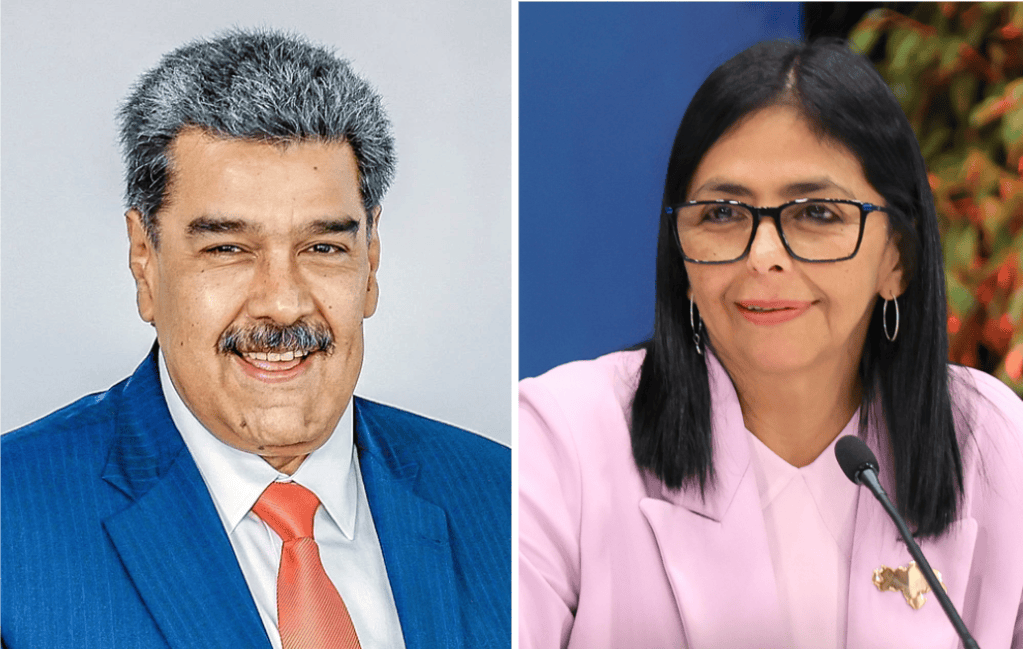
Regime change, meaning the overturning of a legal order, has not taken place in Venezuela since the U.S. invasion. Instead, the deposition of former President Nicolás Maduro by the U.S. military and his replacement by his Vice President Delcy Rodriguez has led to a new stage of Venezuela’s regime, one which the world should watch carefully. The capture or elimination of a foreign leader without a ground invasion has become a new tool of the U.S., and the effects of such a strategy both on the target country and on U.S. foreign relations are so far uncharted.
In this piece, I will discuss three dimensions of the situation in Venezuela. The first is how effective the strategy has been in affecting a stable shift in Venezuela’s policies away from those which landed Venezuela under a U.S.-led sanctions regime in the first place. The second is to ask how the strategy employed in Venezuela will affect the reputation and legitimacy of the U.S. in the western hemisphere. Will leaders aligned with Venezuela engage in preemptive compliance? Will this violation of sovereignty alienate the U.S. from partner states in Latin America? Finally, I will discuss the ‘on the ground’ reactions and what they may forecast for the future, and if American policymakers should be worried about public opinion regarding their interventions.
Part 1
Who is Rodriguez? I would argue that she is old wine in a new bottle, if even that. A member of Venezuela’s government since the time of Hugo Chavez, who served as president from 1999 to 2013, she has been a loyalist to Maduro and had a large role in the country’s oil industry.1 While she has been cast as a pragmatist economically, that is not an indicator of genuine political reformism. Furthermore, she has been on the Drug Enforcement Administration’s radar since 2018 and has been connected to money laundering while having ties to other Venezuelan officials indicted for drug trafficking by the U.S.2 Her government has taken tentative steps towards releasing political prisoners and liberalizing the country; however, it is unclear how committed to these reforms Venezuela’s leadership is, and if they believe the U.S. is committed to encouraging reforms. U.S. President Donald Trump has signalled a desire to “take over” Venezuela’s oil industry and his Secretary of State Marco Rubio has placed democratization as a distant priority on the agenda.3 While this strategy likely does some work to assuage the current government of Venezuela, it also does not provide a good recipe for a stable change in policy within the country as a whole. As a matter of fact, a United Nations (UN) mission has found that much of the Maduro government’s repressive apparatus has not been dismantled, indicating the realities behind public statements inside and outside of Venezuela post-Maduro.4
The current relations with Venezuela are conducted under an implied threat of force rather than shared values or mutual exchange. The lack of such a basis for relations is inherently unstable, and means that, should the U.S. capabilities to coerce Venezuela diminish, Rodriguez or her successors may have little incentive to continue a conciliatory approach. This danger is also recognized by business figures; investment in Venezuela’s vast oil reserves seems to be contingent on enduring changes to Venezuela’s government rather than a simple change of leaders within the same regime.5 These investments are much needed, as Venezuela’s economy has been in a state of crisis and will likely continue to be a focal point of internal instability, refugee crises, and illegal activity until its fortunes improve, which will require a change in course from failed policies and reliable relief from sanctions.6
Part 2
The reaction of political leadership in Central and South America is polarized along political lines. Importantly, the left-wing presidents of Brazil and Mexico have both condemned the actions of the U.S.7 However, these condemnations have not carried a strong material cost, and have yet to indicate an inflection point in U.S.-Latin American relations. Where the alienation of Brazil and Mexico will count is in its long range effects of encouraging wariness of U.S. intentions in their region, which may push them towards greater partnerships with China, a state which is less overbearing in comparison while offering many of the same benefits as a partner. Venezuela itself is attempting to break its isolation. However, the difficulties with the rule of law and, in particular, the country’s role as a haven for narcotics trafficking will be an issue until Venezuela becomes more stable. The sudden cancellation of Rodriguez’s first foreign visit in Colombia with President Gustavo Petro, may be indicative of this challenge, or some other pressure or mitigating factor on relations which has not yet been made clear.8
At the same time, the anti-communist sentiment being revived by the Trump administration is finding allies in the Latin American right, who will be critical in the administration’s strategy going forward. This common ground has been found because these right-wing parties can be relied upon to support an interventionist and confrontational policy towards Latin America’s remaining socialist autocracies in Nicaragua and Cuba, both of which remain a thorn in the side of the U.S.. The U.S. has proven in Venezuela, and later Iran, that its threats are not to be taken lightly. Because of this danger, I expect both states are preparing to mobilize their defenses or find a way to appease Trump. Much like Rodriguez, however, we should not expect anything more than token liberalization as these regimes have a vested interest in maintaining power, while at the same time there is not substantial will in the U.S. to push for democratization.
Part 3
The Latin American public seems to have either remained neutral or supported the removal of Maduro.9 Widely seen as an autocrat, he had few defenders who did not lead similar governments. Provided that the U.S. keeps its strikes limited to the structures of unpopular governments, this style of intervention will not provoke an electoral backlash in Latin America. However, long term lack of democratization coupled with economic imperialism via control of natural resources will provide an explosive combination when it comes to fomenting anti-Americanism.
Conclusion
The ostensible success of the intervention in Venezuela may encourage more reckless use of force against perceived enemies of the U.S. As we have seen with global oil prices following the initiation of hostilities with Iran, this confidence may be misplaced and reckless rather than well-founded.
Work Cited
1. “Who is Delcy Rodriguez, Maduro’s VP and now the acting president of Venezuela?” France 24, January 6, 2026. https://www.france24.com/en/americas/20260106-delcy-rodriguez-profile-maduro-deputy-acting-president-venezuela.
2. Mustian, Jim, et al. “AP Obtains Documents Showing Venezuelan Leader Delcy Rodriguez has been on DEA Radar for Years.” Associated Press, January 17, 2026. https://apnews.com/article/delcy-rodriguez-donald-trump-venezuela-drugs-maduro.
3. Ben-Ur, Samuel. “The US’ Delcy Rodriguez Dilemma.” The National Interest, February 12, 2026. https://nationalinterest.org/feature/the-us-delcy-rodriguez-dilemma.
4. “UN Mission Says Venezuela’s Repressive Apparatus Persists after Maduro Ouster.” Reuters, March 12, 2026. https://www.reuters.com/world/americas/un-mission-says-venezuelas-repressive-apparatus-persists-after-maduro-ouster-2026-03-12/.
5. Kimball, Spencer. “Exxon CEO Says Venezuela Needs to Transition to Democracy for Oil Investment to Make Sense.” CNBC, January 30, 2026. https://www.cnbc.com/2026/01/30/exxon-ceo-says-venezuela-needs-to-transition-to-democracy-for-oil-investment.html.
6. Moleiro, Alonso. “Delcy Rodriguez Inherits a Dying Economy in Venezuela.” El País, January 7, 2026. https://english.elpais.com/economy-and-business/2026-01-07/delcy-rodriguez-inherits-a-dying-economy-in-venezuela.html.
7. Sastre, Thomas. “Latin America’s Leaders React to US’ Ouster of Maduro.” Latin America Reports, January 3, 2026. https://www.latinamericareports.com/latin-americas-leaders-react-to-u-s-ouster-of-maduro-in-venezuela/13231/.
8. “Venezuela Leader’s First Foreign Trip Abruptly Cancelled.” Radio France International, March 13, 2026. https://www.rfi.fr/en/international-news/20260312-venezuela-leader-s-first-foreign-trip-abruptly-canceled.
9. Bubola, Emma. “Majority of Latin Americans Endorsed Trump’s Raid in Venezuela, Polls Show.” The New York Times, January 21, 2026. https://www.nytimes.com/2026/01/21/world/americas/latin-america-venezuela-us-raid-maduro-polls.html.

